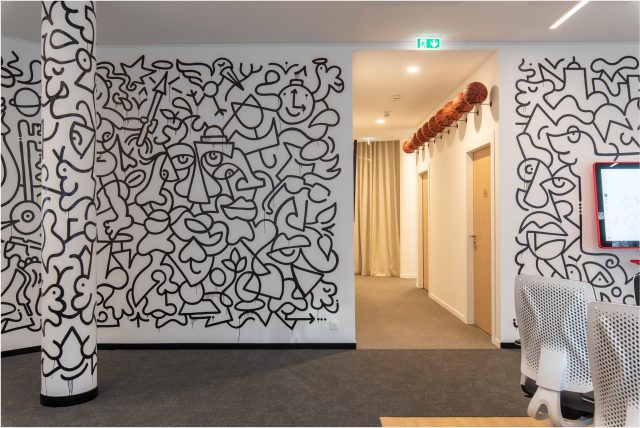
Corporate Signage: Consider It from the Office Design Phase
Corporate signage is often considered at the end of a project, once the work is finished and the spaces are already furnished. However, to create coherent, functional offices aligned with your visual identity, it should be planned from the very first design stages.
In Paris, where companies seek to offer high-performance and inspiring workspaces, signage is no longer limited to directing visitors. It has become a true tool for visual communication, flow management, and expressing corporate culture.
At LES BATISSEURS, we integrate signage from the initial reflection phase of every professional office fit-out project, so that it fully contributes to the user experience and reflects your DNA.
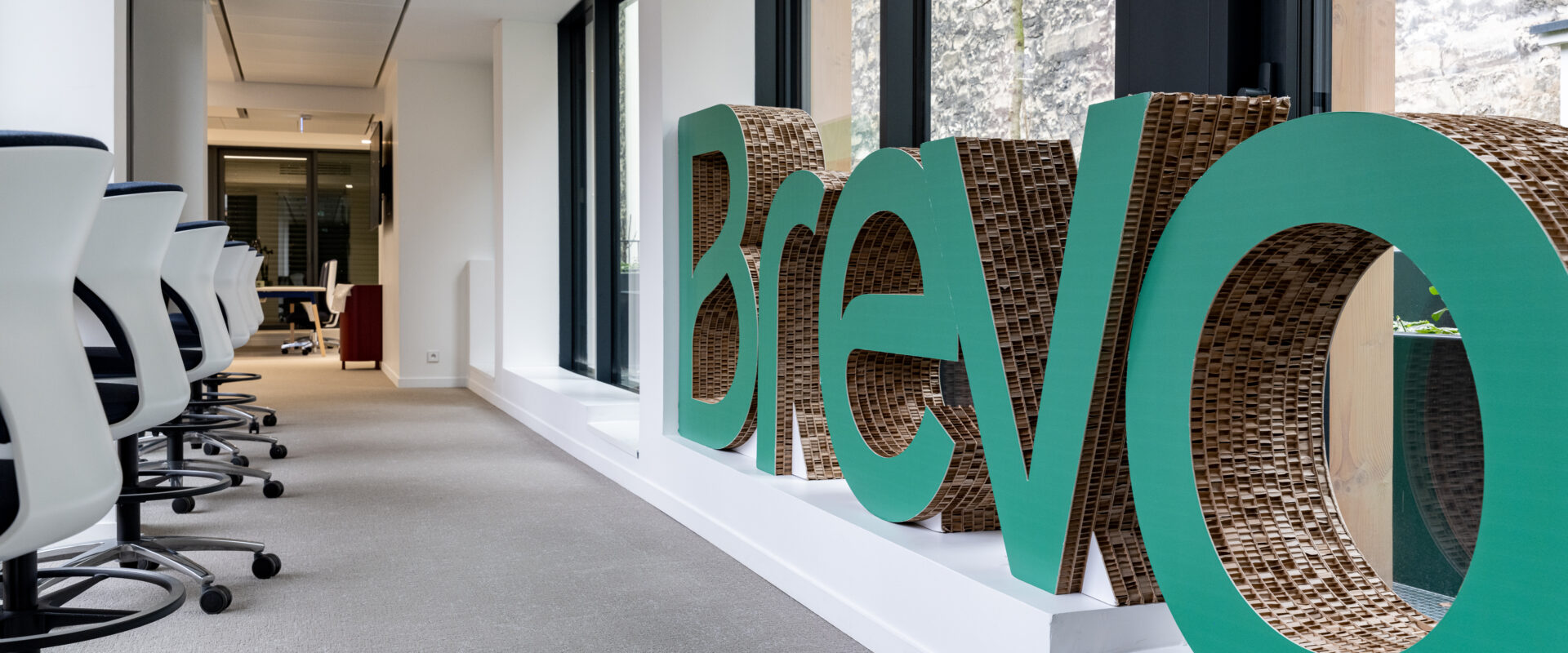
What Is Corporate Signage?
Corporate signage encompasses all visual elements used to inform, orient, secure, and enhance an organization’s spaces. It guides employees, visitors, and partners as they move through professional premises while reinforcing the brand image.
The 5 Main Types of Signage
Directional signage
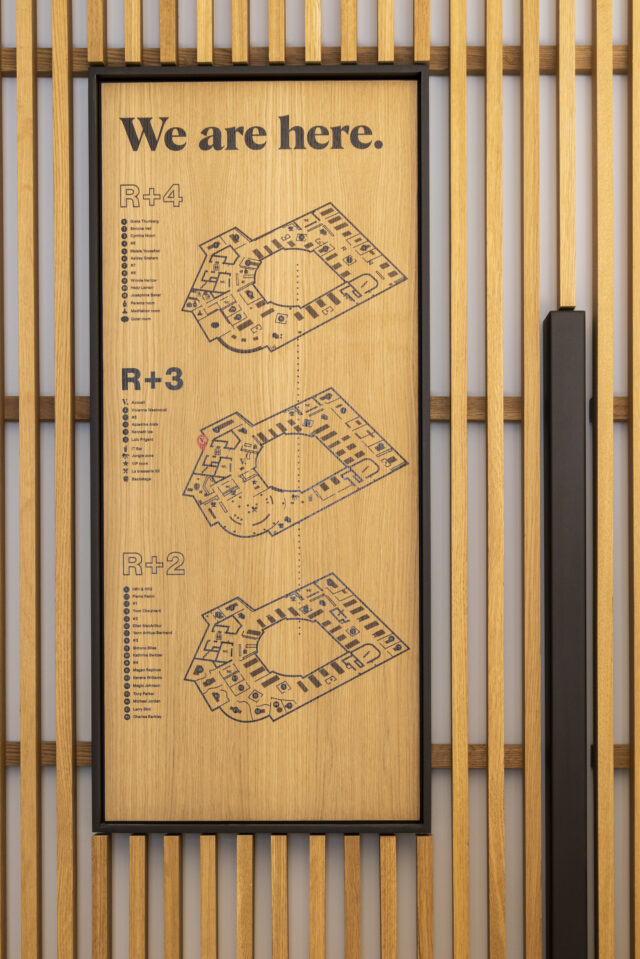
It facilitates orientation and wayfinding through traffic indications, arrows, or floor plans.
Informational signage
It conveys practical information: identification of departments, hours, instructions, or internal information.
Safety signage
Mandatory in companies, it notably includes safety pictograms, evacuation plans, and risk prevention indications.
Identity signage
It highlights the brand through logos, slogans, values, or graphic elements from the brand guidelines.
Promotional signage
It promotes a product, service, internal campaign, or a strategic company message.
Beyond their primary function, these systems help strengthen the coherence between spaces and the brand image, while ensuring perfect visual consistency with the brand’s color palette and graphic universe.
Interior Signage: Every Space Tells Your Culture
Interior signage directly contributes to the atmosphere and personality of the offices. Each zone becomes an opportunity to convey company values and improve the employee experience.
Reception & Front Desk
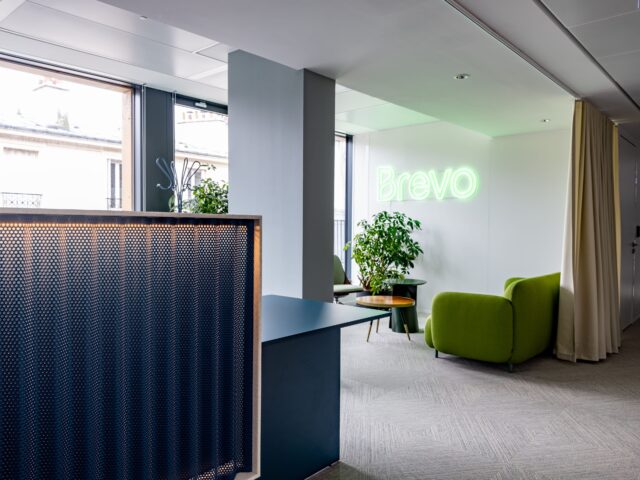
The reception area is the first point of contact with your company. Carefully designed signage allows you to immediately assert your positioning and brand identity.
Among the most commonly used solutions:
- Custom reception plaques
- Raised logos
- 3D lettering
- Brand walls
- Illuminated signage
These elements reinforce visual impact from the entrance and contribute to a memorable visitor experience.
Offices & Open Spaces
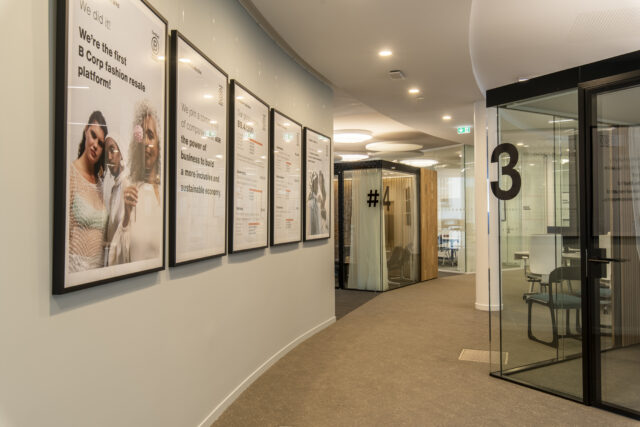
In workspaces, signage helps structure the premises while diffusing the corporate culture.
Frequently used systems include:
- Window graphics on glass partitions
- Wall stickers
- Internal communication panels and roll-up banners
- Inspirational quotes
- Collaborative zone signage
This approach promotes the readability of spaces while creating a coherent daily environment.
Meeting Rooms
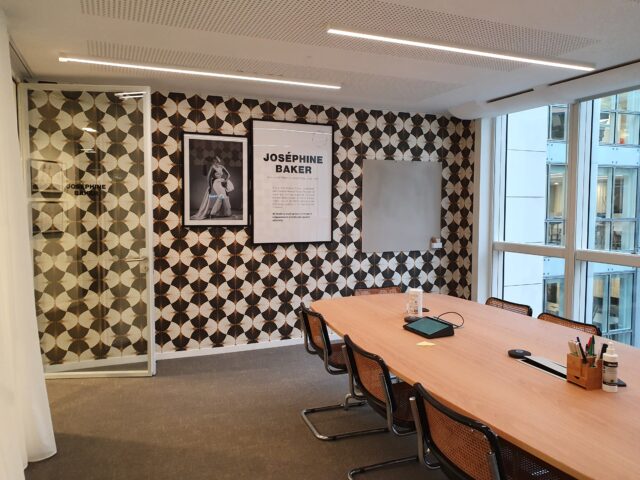
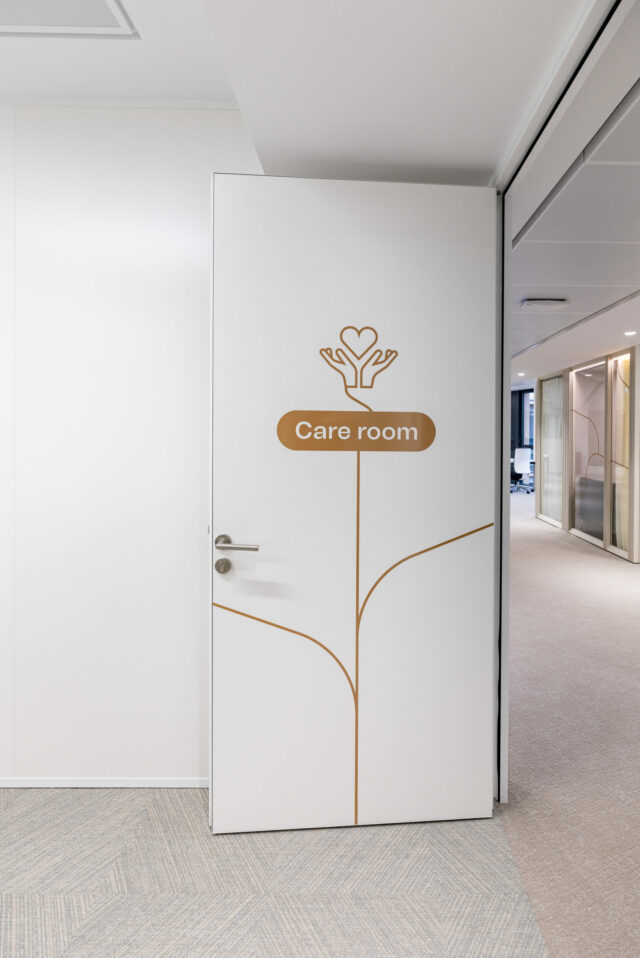
Meeting rooms require clear identification to streamline their daily use and improve the user experience.
The most common solutions include:
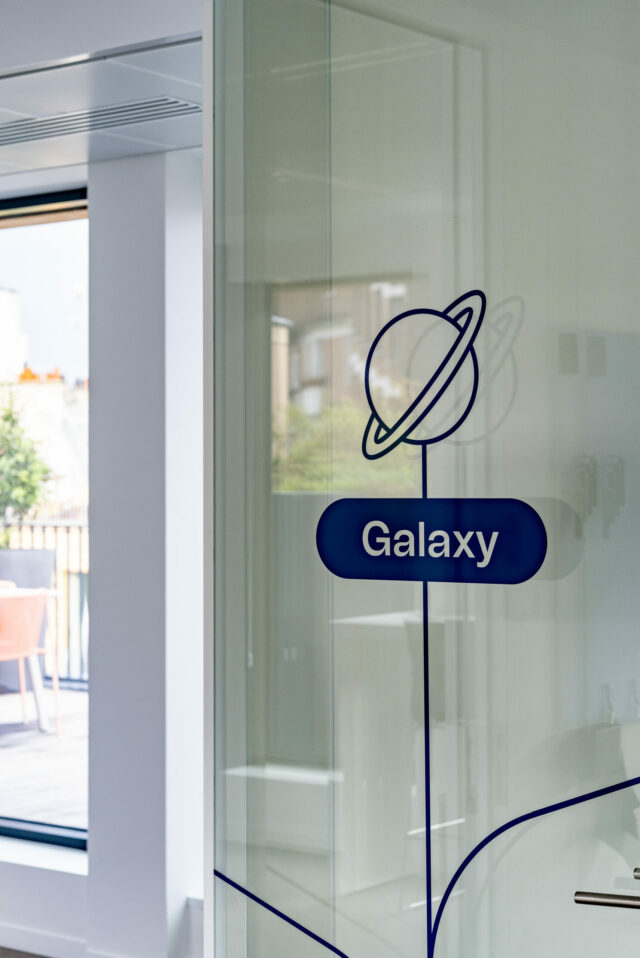
- Custom door plaques
- Window graphics on glass partitions
- Room theme identification
Beyond their practical function, these elements also contribute to the company’s visual identity. A naming convention inspired by the brand’s universe, its professions, or its values helps strengthen the coherence of the spaces and the corporate culture.
Circulation & Floor Marking
Transition zones are essential in flow management.
Floor markings, pictograms, and directional signage naturally guide users while optimizing the visitor journey.
Good design is based notably on:
- A clear hierarchy of information
- Excellent readability and contrast
- Consistent color codes
- Signage visible from a distance
Legal Obligations
Every company must integrate safety signage that complies with current regulations. This notably includes evacuation plans, fire pictograms, safety markings on glass partitions, emergency exit indications, and safety instructions. These elements must remain perfectly visible and accessible throughout the professional premises.
Toward Digital and Connected Signage
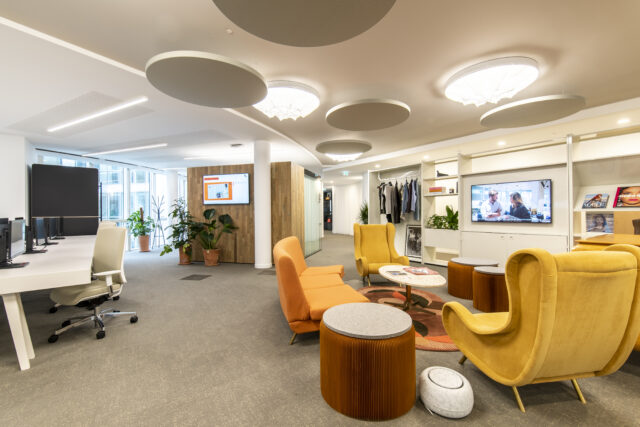
Signage is also evolving with new office uses. More and more companies are integrating digital systems such as:
- Connected reception screens
- Digital signage
- Interactive maps
These solutions complement traditional physical signage and allow information to be adapted in real time. In hybrid work environments, they offer more flexibility while reinforcing the user experience, information flow, and movement management.
Exterior Signage: The First Impression
Exterior signage is often the first point of contact with visitors. It plays an essential role in the perception of the company even before entering the premises.
The main systems include:
Reception Totem
The reception totem allows for quick identification of a building or headquarters. It reinforces the company’s visibility and facilitates orientation.
Signage
The sign enhances the brand and ensures a visible presence from public spaces.
Directional Panel
The directional panel guides visitors toward entrances, parking lots, or different areas of the site.
Parking Signage
Particularly useful on large sites or corporate campuses, it improves traffic flow and user safety.
Materials Adapted to Outdoor Conditions
To guarantee their durability, outdoor supports must resist weather and UV rays. The most commonly used materials are:
- Alu Dibond
- Outdoor PVC
- Powder-coated steel
- High-resistance Plexiglas
The choice of materials contributes as much to longevity as to the overall aesthetics of the project.
Why Integrate Signage from the Office Design Phase?
Signage designed after the work is completed often remains a simple decorative addition. Conversely, when it is thought out from the design phase, it becomes a true strategic tool serving the user experience, orientation, and brand identity.
At LES BATISSEURS, experts in space planning, this approach is part of our method:
Think → Create → Build
From the initial reflections, we integrate signage into the global project in order to:
- Anticipate the visitor journey
- Organize flow management
- Guarantee perfect coherence with the brand guidelines
- Optimize the visibility of spaces
- Refine Office Branding
- Strengthen corporate culture
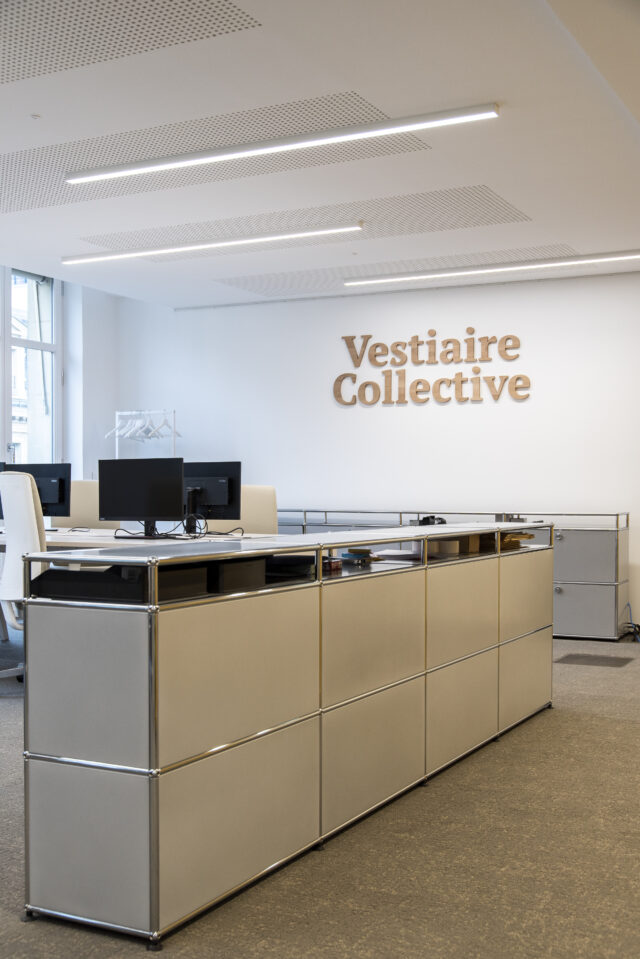
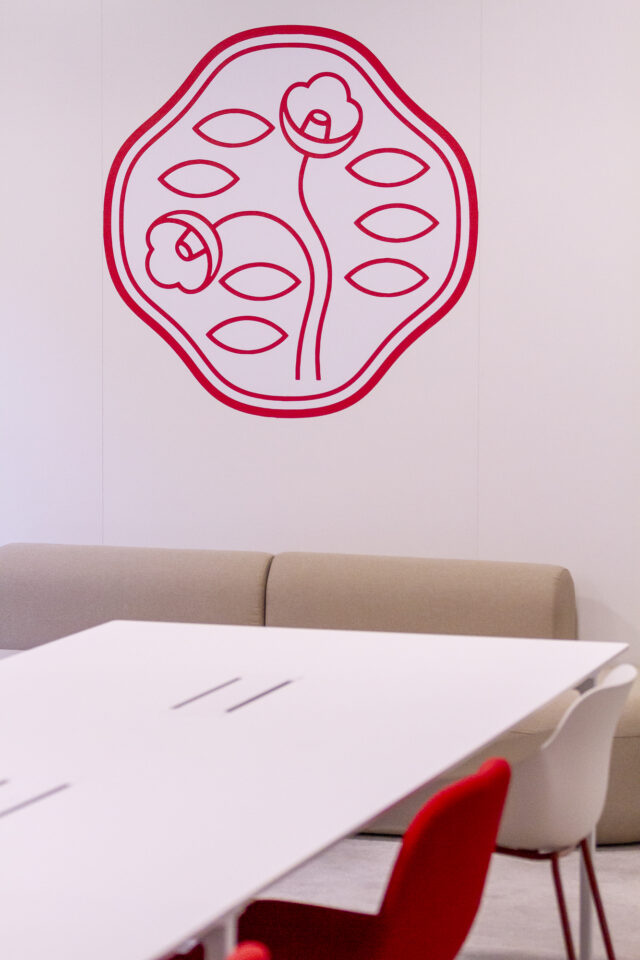
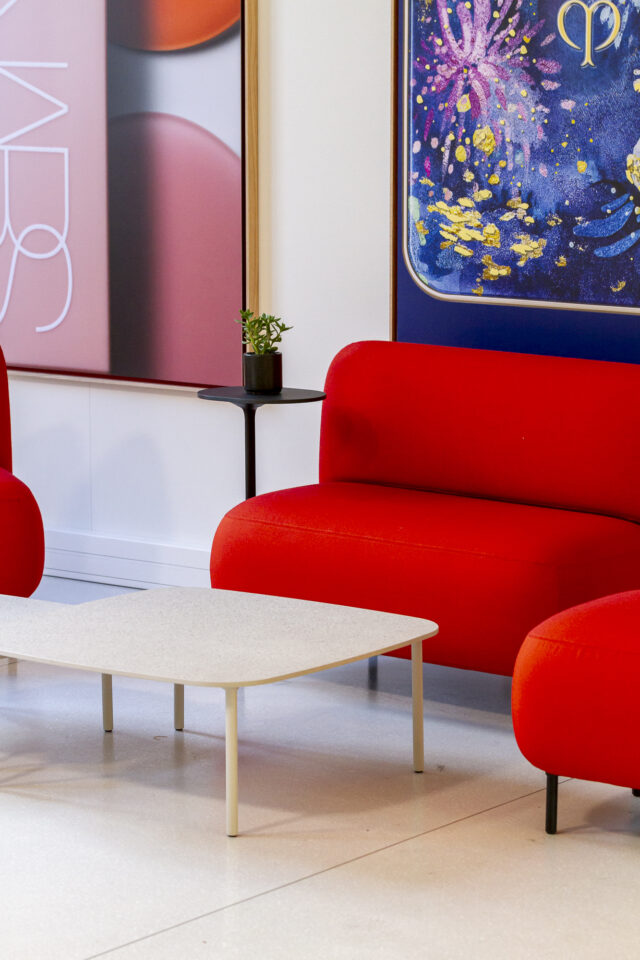
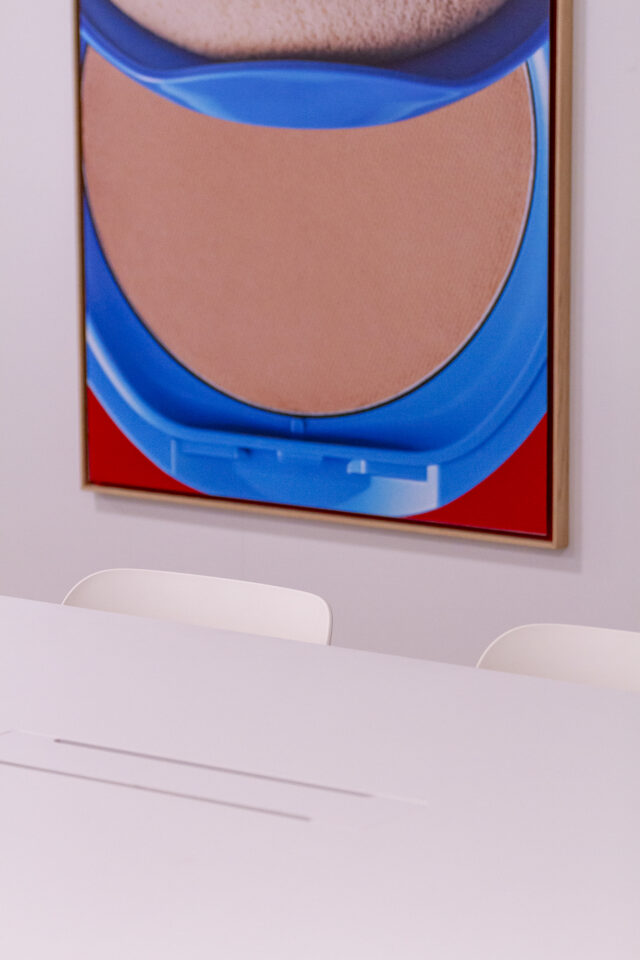
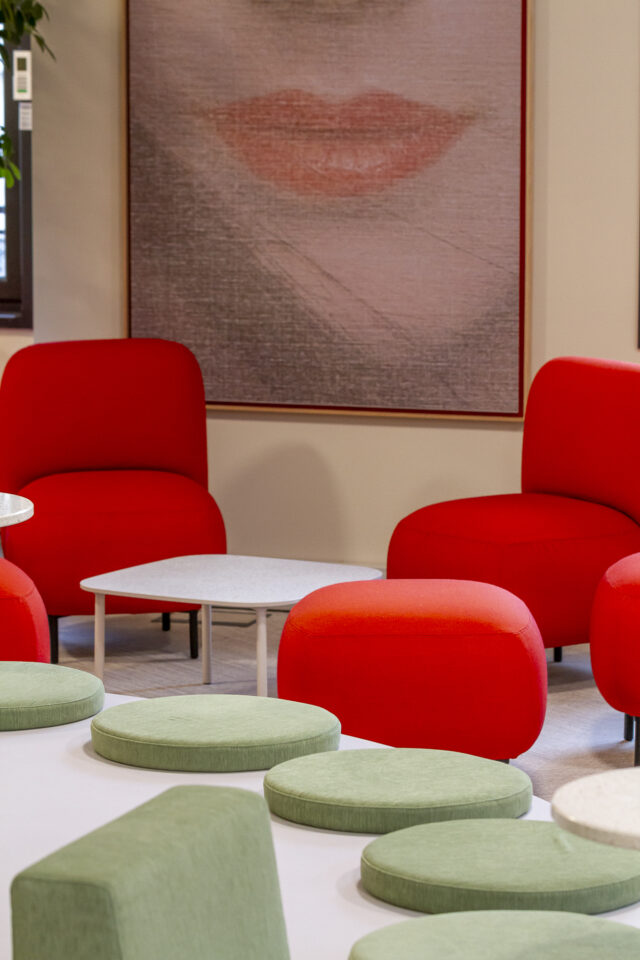
This approach has notably been deployed on projects carried for companies such as Vestiaire Collective, Heetch, Brevo, and Shiseido, where signage fully contributes to the overall experience of the spaces.
Result: signage in perfect osmosis with the interior architecture, designed to be one with your spaces.
Signage, Employer Brand, and Employee Experience
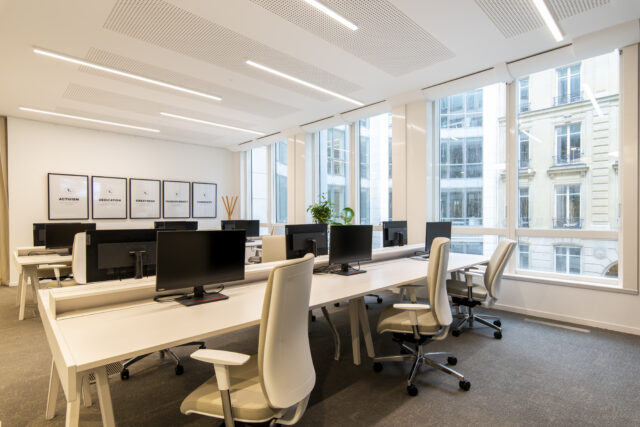
Today, offices have become true internal communication tools. Custom signage contributes to developing a sense of belonging, reinforcing the employer brand, and improving employee onboarding.
It notably allows for:
- Embodying company values
- Facilitating the integration of newcomers
- Supporting the hybrid workspace
- Promoting team engagement
Signage then becomes a concrete medium for corporate culture.
This approach is also part of CSR and fit-out challenges. At LES BATISSEURS, we prioritize sustainable solutions such as:
- Recyclable materials
- Eco-designed supports
- Integrated greenery
- Local manufacturing
The goal: to create a responsible workspace where aesthetics, functionality, and environmental commitment move forward together.
How to Design Your Custom Signage? Our 4-Step Approach
Step 1: Space Analysis and Flow Identification
We conduct a space analysis to understand the uses, movements, and needs of different users. This step allows us to precisely define the future visitor journey.
Step 2: Design Integrated with Brand Guidelines
Our teams design signage aligned with your visual identity:
- Colors
- Typography
- Graphic universe
- Key messages
The goal is to ensure perfect coherence with your brand image.
Step 3: Choice of Materials and Manufacturing
We select the most suitable supports according to the technical, aesthetic, and environmental constraints of the project. Each solution undergoes a true custom design.
Step 4: Installation and Coordination with Construction
Installation is coordinated with the entire construction site to guarantee a fluid integration into the complete workspace fit-out project. Thanks to our turnkey support, signage becomes a natural element of your future offices.
Are you preparing an office fit-out project in Paris ? LES BATISSEURS supports you in the design and integration of custom signage planned from the project’s origin to strengthen your brand image and your employees’ experience.
Frequently Asked Questions About Corporate Signage
What are the legal obligations regarding signage?
Companies must implement safety signage including evacuation plans, emergency exits, regulatory pictograms, and risk prevention systems in accordance with applicable regulations.
How much does custom office signage cost?
The cost depends on many criteria: surface area, number of supports, materials used, graphic complexity, and installation methods. A complete project is generally studied via a quote to obtain a solution perfectly adapted to your budget.
Which materials should be chosen for sustainable signage?
Alu Dibond, high-quality PVC, powder-coated steel, Plexiglas, and certain recycled materials offer an excellent compromise between aesthetics, durability, and maintenance.
Can signage be integrated into an office renovation project?
Yes. Signage can be integrated into any remodeling or office renovation project. It is even particularly effective when planned from the space planning phase to ensure overall coherence.
What is the difference between signage and interior decoration?
Office decoration primarily aims for the aesthetics and atmosphere of the spaces. Signage has a complementary function: to inform, orient, secure, and facilitate uses while contributing to the company’s visual identity.
You Might Also Like These Articles
Learn More
Choosing a Company Specialized in Office Fit-Outs
For your office fit-out, professional support is essential to create a space that embodies the company’s DNA and fosters productivity.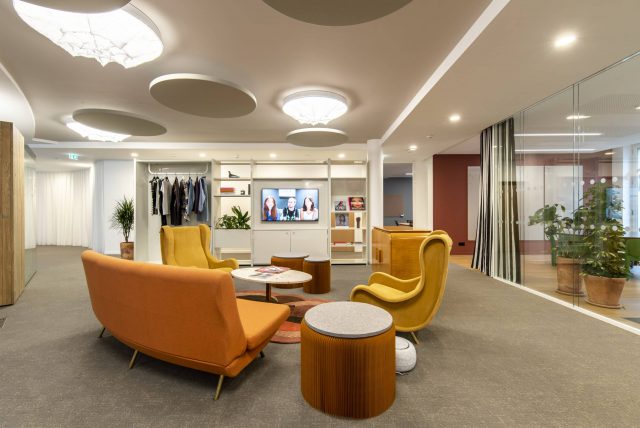
Learn More
Office Branding: Offices as Ambassadors of Brand Identity
Beyond a simple workspace, offices have become true ambassadors of brand identity. Offices serve to convey the brand’s values, culture, and aesthetics. The work environment…