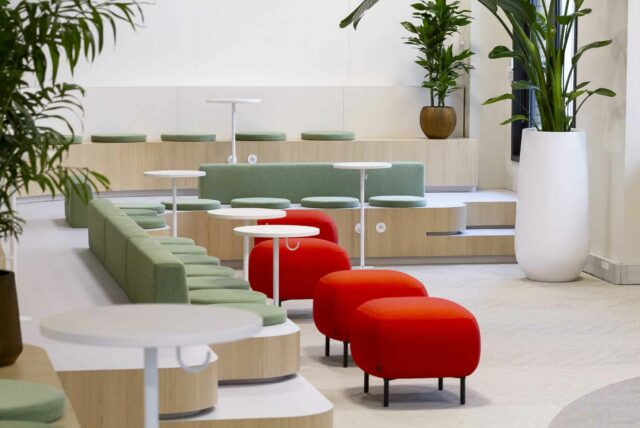
Design Your Offices as a Collaborative Workspace
Companies have realized the value of collective intelligence. The concept of collaborative work has become a true leitmotif, especially since the rise of remote work has led to feelings of isolation among employees. The office is now recognized as the essential place to rebuild the bond between teams.
Today, companies face the need to redesign the workspace. How must the office adapt to encourage exchange and collaboration and recreate the essential link between employees?
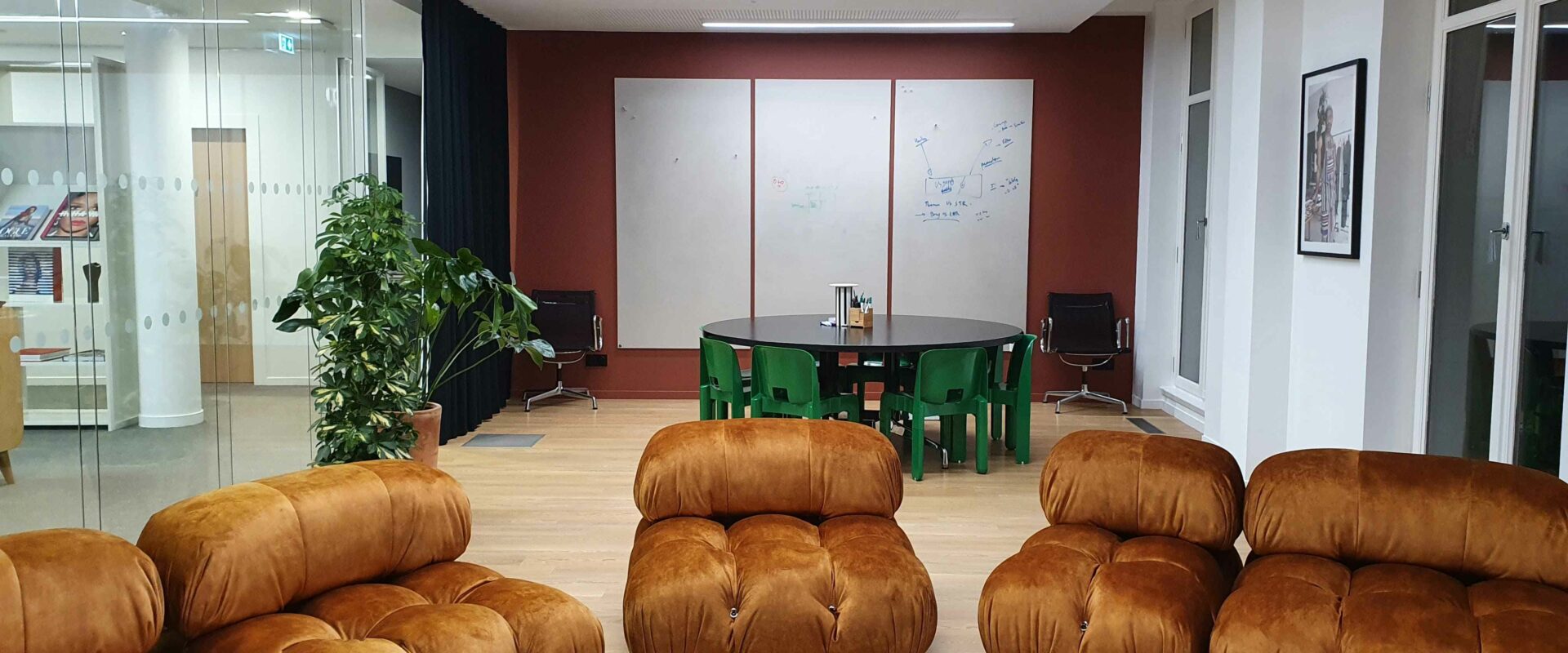
The Office: The Physical Embodiment of the Company
While remote work offers undeniable advantages, it tends to lock employees into a bubble of solitude that is detrimental to creativity. Human beings have a primary need to live in a community and belong to a group. According to the Ifop/SFL barometer for Paris Workplace dated December 3, 2020: “In the minds of employees, the office must remain the ‘main’ place of work. 63% of employees want to work the majority of their time at the office, while only 8% dream of working exclusively remotely.”
The office is the physical embodiment of the company. It is where the bond that fuels employee engagement is created. It is the essential place for implementing collaborative, innovative, and creative projects, and beyond that, for promoting the transmission of knowledge, sharing, and the training of juniors by their peers. All of these projects require human interaction.
The Office Becomes Collaborative
With the COVID-19 health crisis and the widespread adoption of remote work, office occupancy rates have dropped significantly. Companies are therefore faced with a dilemma regarding the utility of empty office square footage. Utilizing these vacant spaces represents a significant source of cost rationalization.
At the same time, companies have become aware of the value of collective intelligence and teamwork on productivity. Indeed, individuals experience more joy working together. Their motivation is also stronger when they are not isolated, as the feeling of belonging to a group encourages them to excel. They thus express more interest and engagement in their missions.
For these reasons, it is the ideal time to consider optimizing your spaces by making them conducive to collaboration. A strategy that will pay off for both employees and the company.
While a collaborative workspace is characterized by the removal of partitions, it should not be confused with an open space. Although both layout systems emphasize collaboration, a collaborative workspace advocates for more isolation and privacy solutions than an open space. The collaborative space compensates for the proven disadvantages of open-plan offices on employee well-being: stress, difficulty concentrating, and lack of privacy.
The collaborative space thus offers a fair balance between collective work and individual work.
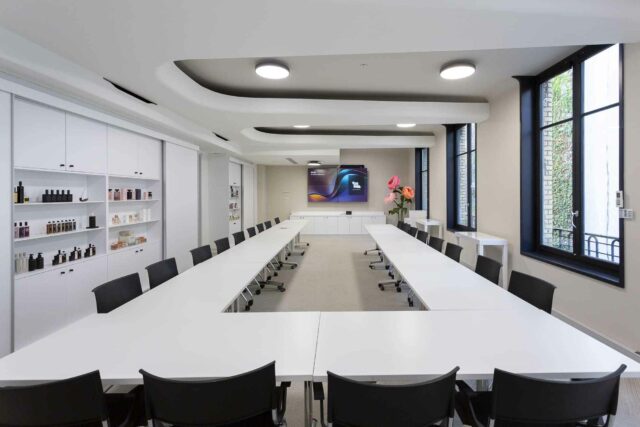
The ideal combination offers individuals the opportunity to collaborate and socialize, but also to concentrate and recharge. The space must be fluid and provide multiple meeting points for very different postures and moments that meet the multiple needs of the workday. The collaborative space is a flexible environment that gives employees the opportunity to choose their work environment according to their current needs, desires, or mood. To highlight cross-functional exchanges and encourage interaction, the company must prioritize collective production spaces and social areas, but also offer individual workspaces for both sedentary employees and mobile workers.
How to Create a Collaborative Workspace?
Your office layout is not limited to creating collaborative desks; design all your spaces to foster the collective.
Collective Production Spaces
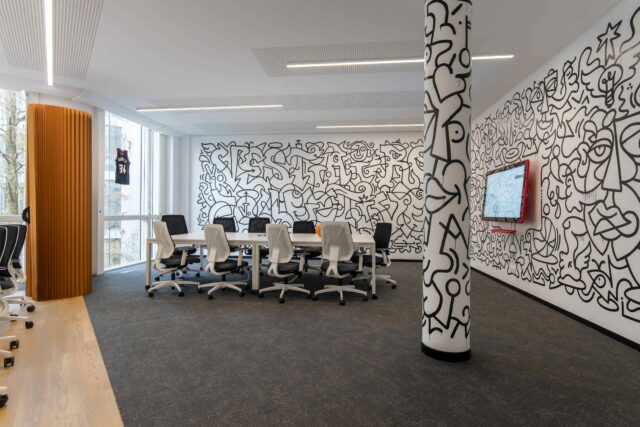
In the era of collaborative work, companies must provide their teams with spaces that foster exchange and creativity. The meeting room is being reinvented and taking multiple forms to meet the various immediate needs of teams: client presentations, brainstorming, video conferences, one-on-ones… These meeting rooms integrate naturally into the workspace. Employees can thus easily move from one to another depending on their needs. Spaces are accessible spontaneously or in an organized manner. They adapt to each person’s personality and respect their individuality. This is particularly beneficial. Indeed, the goal of collaboration is not the assimilation of a single thought, but rather the confrontation of diverse ideas.
Social Spaces
Beyond the anecdotal image of foosball, a company’s social areas—such as the cafeteria, outdoor spaces, the agora, etc.—allow for spontaneous encounters and informal discussions. These spaces have proven effective in fostering camaraderie among employees, strengthening the sense of belonging to a team, and assimilating corporate culture. They are also great assets for Human Resources departments in recruiting talent. These are, indeed, spaces that make a difference, especially for young graduates.
Individual Workspaces
At the heart of the hive, it is vital not to neglect individual work. Total collaboration does not exist, and everyone must be able to isolate themselves. It would be illusory to try to draw a sharp line between collaborative work at the office and individual work at home. A 100% collaborative day does not exist.
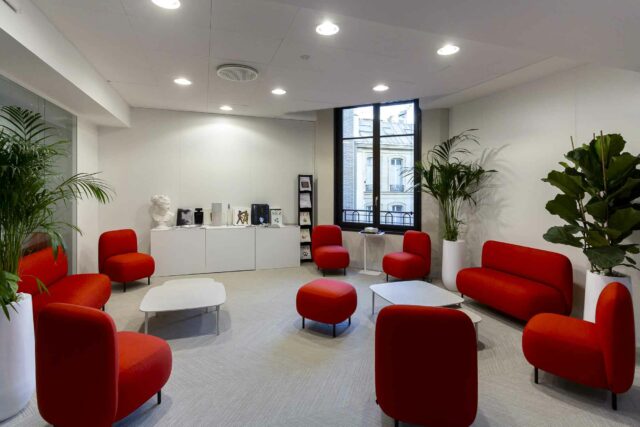
Many layout and furniture solutions exist to create individual space within collaborative areas. Plug-and-play spaces in cozy armchairs or on dynamic high stools, phone booths, enveloping alcoves, privacy bubbles, more traditional workstations in a flex office setup…
The office is reinventing itself to establish its status as the living heart of the company. It is a place that allows for maintaining social bonds and expressing corporate culture. It must establish itself as the hub of collaboration where it is possible to get your fill of exchanges, ideas, and inspiration.
Open-space design, coworking space, office redesign, or company relocation in Île-de-France—we are at your full disposal to discuss your project now: contact@lesbatisseurs.paris
You Might Also Like These Articles
Learn More
Which professional premises should you choose for your company?
Choosing the right premises for your offices is essential. They have a decisive impact on the project’s outcome. Will the premises allow for an optimal…
Learn More
Instead of Relocating, Opt for Office Redesign
The health crisis has disrupted our approach to office use, and companies are now facing new challenges. The widespread adoption of remote work has had…