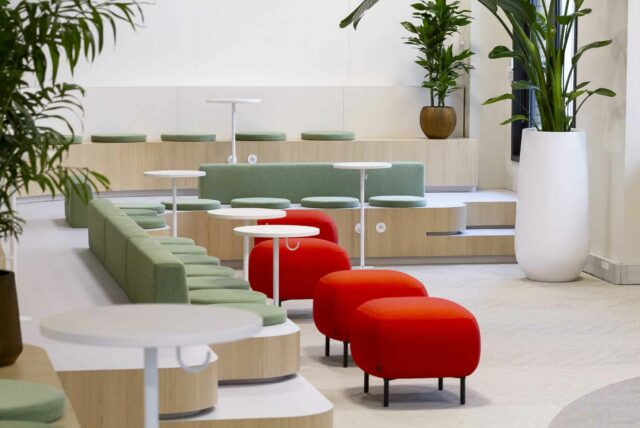
Instead of Relocating, Opt for Office Redesign
The health crisis has disrupted our approach to office use, and companies are now facing new challenges. The widespread adoption of remote work has had two major impacts on office occupancy and usage. On one hand, office occupancy rates have sharply declined. On the other hand, employees are expressing a growing need for collaboration tools when they are in the office. Whether it’s a space issue, a change in work organization, or a desire to improve working conditions, for many companies, relocation seems inevitable. Unless a comprehensive office redesign offers a more immediate, more economical, and less time-consuming solution.
Office Redesign to Address a Space Issue
Your Premises Feel Cramped
An increase in headcount is probably the best reason to relocate. Nevertheless, during a transitional period, redesigning your offices can save you time and postpone the move without degrading your employees’ working conditions. New uses combined with intelligent design can help you cope with significant staff growth.
- Flex office: Implementing a remote work policy supported by a flex office layout, meaning workstations are self-service, can significantly reduce the usable area of your workspace. However, keep in mind that this type of work organization also implies creating new individual and collective spaces (individual lockers, collaborative workspaces, phone booths) and must imperatively take into account the specificities of different professions.
- Space Optimization: Your office layout may simply need to be optimized. Intelligent design can sometimes make walls ‘disappear’. A highly partitioned office, for example, represents a significant loss of space that can easily be reclaimed by opening it up.
- Furniture Change: The furniture may need to be reevaluated. Desks and storage cabinets could potentially be improved to save space.
- Outsourcing: Certain storage spaces or your server room can potentially be outsourced.
However, redesign has its limits when faced with staff growth. It is imperative that your workforce complies with legislation and regulatory constraints stipulated by labor law and fire safety regulations.
Your Offices Seem Oversized
Your employees are less present in the office, and your office space seems oversized for your needs? Check your lease agreement; you might be able to sublet or share a portion of your offices. Beyond the economic aspect, this solution will allow you to foster a true collaborative dynamic.
Renovating the premises will then be necessary to increase space flexibility to meet the needs of your future tenants and offer your employees new, more collaborative work tools.
Office Redesign to Adapt to a New Work Organization
The Covid-19 crisis accelerated changes in our work organization. Remote work has become a lasting fixture while giving rise to a new role for our offices. As the physical embodiment of the company, the office transcends corporate culture. It is also highly valued as a place for collaborative work where encounters, exchanges, and sharing among teams take place. Bearing this new role, the office must reinvent itself to meet the emerging needs of employees.
When the work environment is no longer aligned with work modes, it may not be necessary to relocate. A thorough revision of space planning and an office redesign will allow you to be in perfect harmony with your new work organization.
Office Redesign to Improve Existing Spaces
After a few years in your premises, you may have noticed that they are not perfectly suited to your use.
A redesign will allow you to correct flaws and integrate new spaces that you are missing:
- A better balance between individual workspaces and collaborative zones
- An adjustment of the number and capacity of meeting rooms
- Better consideration of well-being at work: improved lighting and acoustics, greening, ergonomic furniture, etc.
- Enhancement of corporate culture
- Optimization of the IT system
- A revision of user and customer journeys
These are just a few examples of possible adjustments to adapt existing spaces to your actual needs.
Resources to Implement
While less burdensome to conduct, less time-consuming, and less disruptive for teams, a redesign is nonetheless a significant project. Redesign involves a clearly defined action plan and methodical project management equivalent to that of fitting out a new location. This type of project requires multidisciplinary skills. To achieve the best results, it is highly recommended that you seek guidance from an office design professional as early as possible in your reflection, who will help you make the right choices from the start. Beyond their expertise, they can enrich your project with a fresh perspective and innovative solutions.
Key Stages of an Office (Re)design
Defining the Objectives and Stakes of the Redesign
At this stage, it is essential to consider the project’s stakes and, in particular, the company’s aspirations: What corporate culture? What management practices? What interactions between teams? What recruitment objectives in the short, medium, and long term?
Teams, in turn, must be consulted about their functional and technical needs, their uses, and their behaviors.
Finally, the potential and constraints of the location will help define the project’s limits.
Space Planning
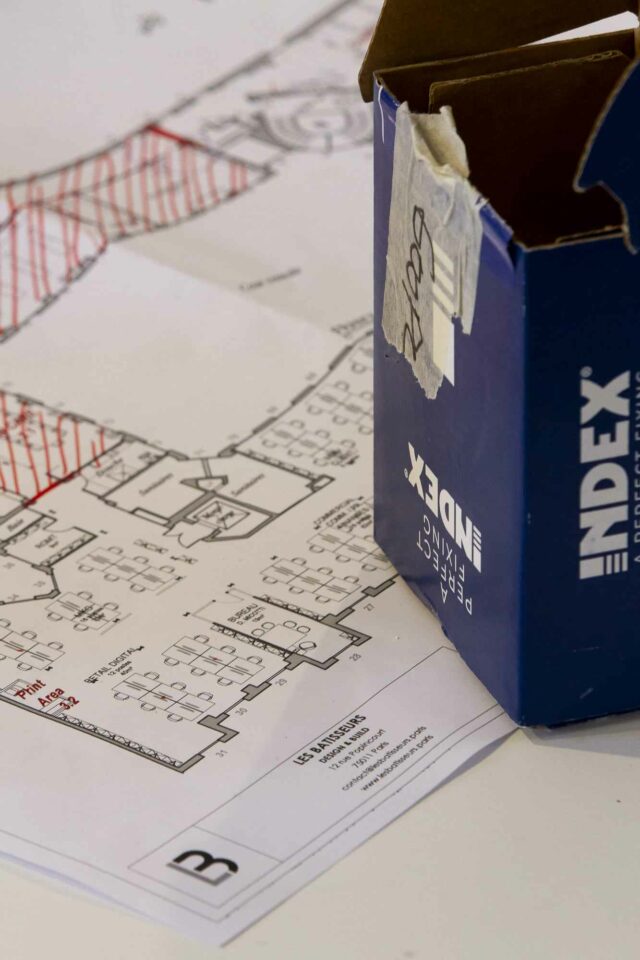
Space planning translates these needs and objectives into plans. In addition to these predefined criteria, essential parameters such as well-being at work, work organization, and functionality are then incorporated.
Construction Management
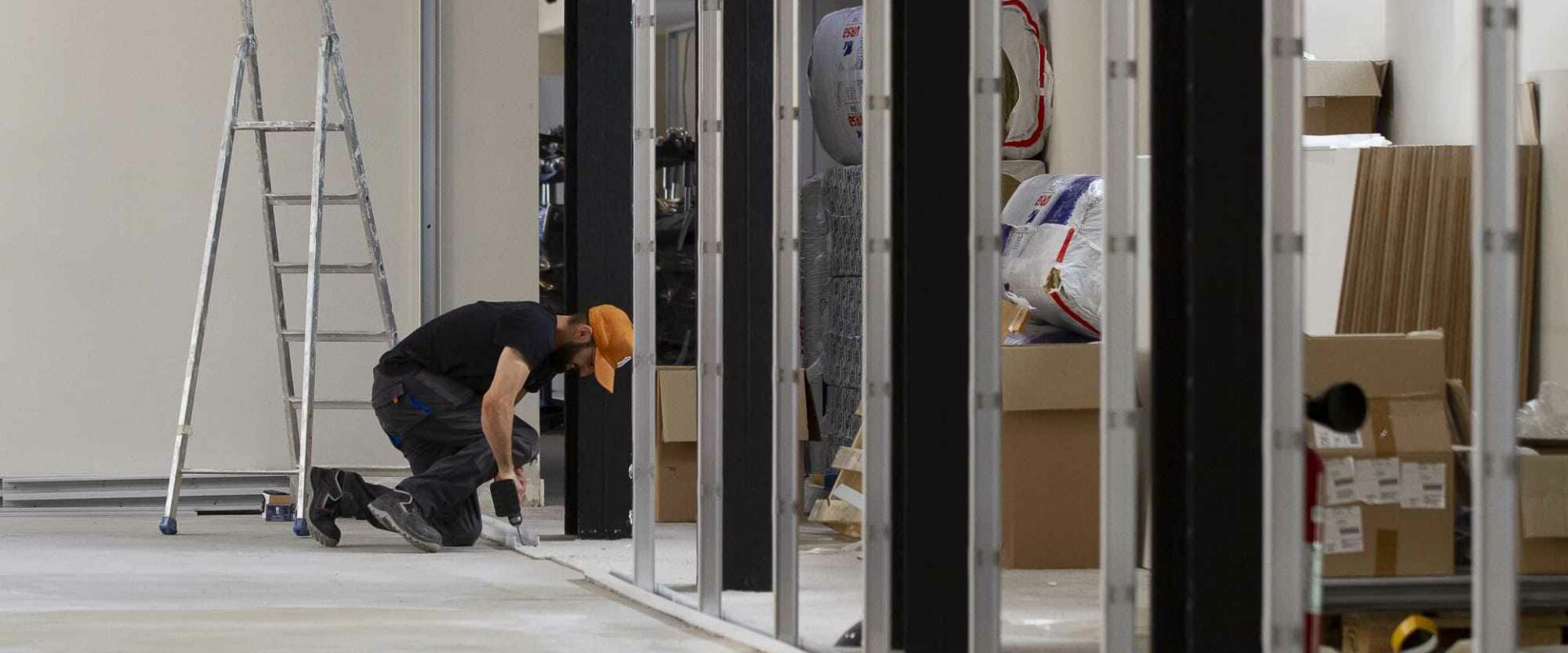
In the case of a redesign, scheduling is crucial. It involves working in an occupied area. Depending on the project’s complexity, it will be essential to establish an adapted intervention schedule. The heaviest and noisiest work, for example, can be planned during a company closure period or during off-peak hours.
Change Management
Less spectacular than a relocation, a redesign nevertheless remains a major change in the lives of employees. It is therefore essential to implement a true change management strategy. This will allow you to gain employee buy-in and ensure the success of your office redesign project. (See our article How to Foster Employee Buy-in).
Whatever your motivation for changing your workspace, relocation is not the only option. An intelligent and well-executed redesign can potentially allow you to remain in your current premises.
We are at your disposal to discuss your project now: contact@lesbatisseurs.paris
You Might Also Like These Articles
Learn More
Which professional premises should you choose for your company?
Choosing the right premises for your offices is essential. They have a decisive impact on the project’s outcome. Will the premises allow for an optimal…
Learn More
Design Your Offices as a Collaborative Workspace
Companies have realized the value of collective intelligence. The concept of collaborative work has become a true leitmotif, especially since the rise of remote work…