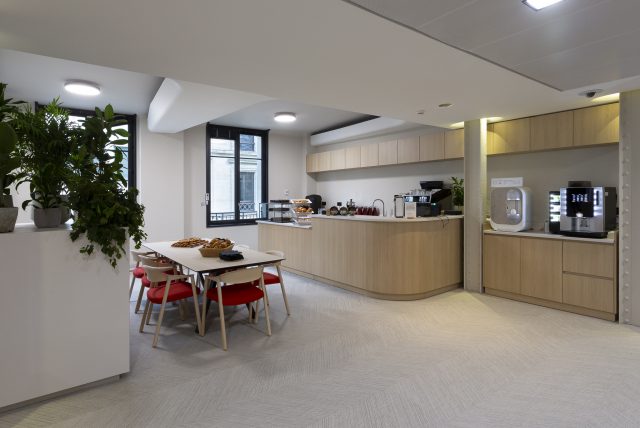
How to improve employee well-being at work?
The health crisis has reshuffled the deck for corporate work. Remote work, flexibility, office layout, individual space, eco-responsibility… the corporate world has had to adapt quickly to new ways of working and the new expectations of French employees.
And beyond their legal obligations (guaranteeing the safety and health of their employees), companies must make well-being at work a lever for performance, employer brand improvement, and talent acquisition. A look back at these expectations, which have become a major challenge for businesses.
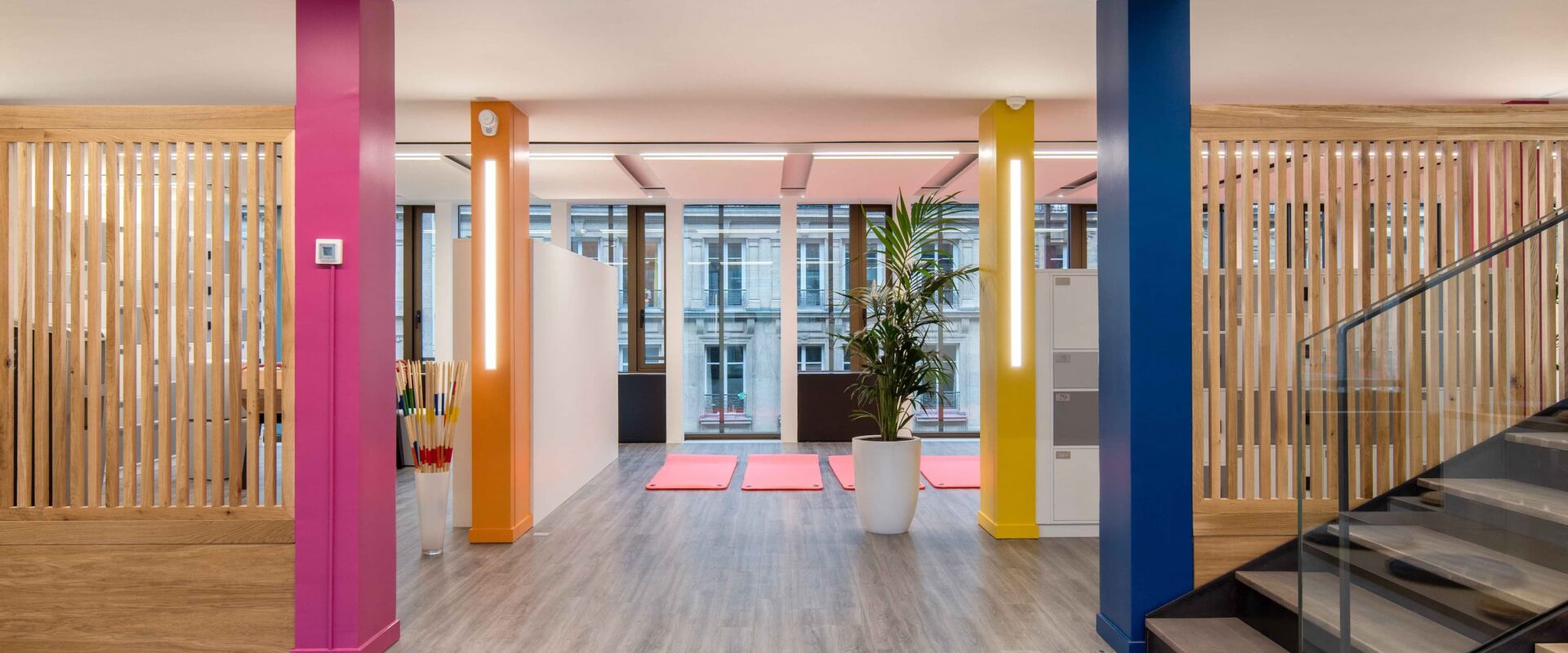
Why is it so important to improve the employee experience?
Meeting employee expectations is certainly a tedious but necessary task. Indeed, a good quality of life at work (QVT) increases productivity, engagement, and employee fulfillment. As proof, according to the Malakoff Médéric barometer, in ten years, the share of employees describing themselves as “very engaged” has decreased significantly, falling from 41% in 2009 to 29% in 2018. The desire to take sick leave / time off without a reason has reportedly even doubled in 10 years. In this context, and to avoid psychosocial risks (unhappiness, burnout, stress at work…), it is necessary to improve the employee experience and focus on well-being, working conditions, and the environment in order to retain them and turn them into your primary ambassadors.
Furthermore, today’s labor market is tight; recruiting and retaining talent requires offering more than just a salary. It should be noted that for one in two employees, “these aspects constitute a major double selection criterion if they have to choose between two equivalent jobs.” Working in good conditions is essential for employee fulfillment and for having higher-performing employees.
Well-being Spaces
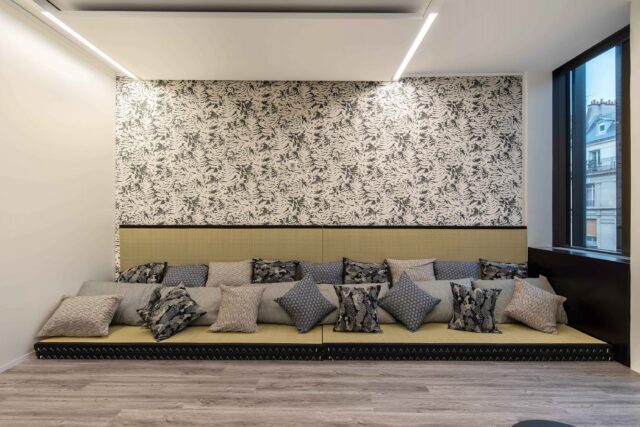
When we talk about well-being at work, we naturally think of management and human relations, yet other factors exist. Indeed, scientific studies have highlighted the importance of comfort in professional spaces. Moreover, a study published in May 2021 by JLL explains that 83% of surveyed employees want more human-centric offices, spaces that promote well-being, and spaces that allow for disconnection and social interaction.
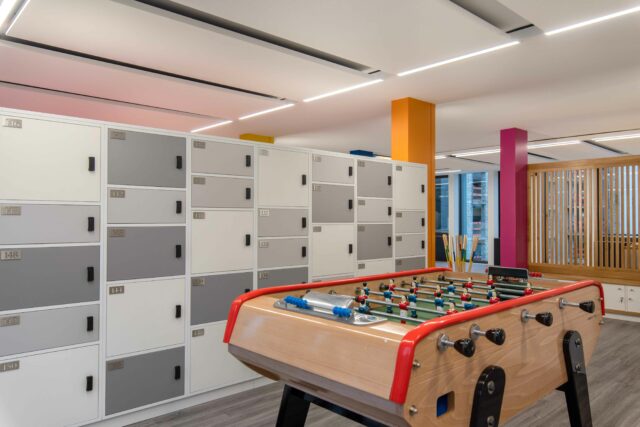
We spend nearly a third of our lives at work, so it is necessary to rethink the office: fewer workstations and more common areas that strengthen the sense of belonging. There is also a need for relaxation areas. For example, more and more companies are creating nap areas, yoga rooms, or meditation spaces. These new working conditions aim to strengthen employee well-being. This will have an impact on job performance and, consequently, on the company’s performance.
The workplace has a considerable impact on individuals’ quality of life and is a major challenge for the company. By investing in well-being spaces, companies will attract and retain the best talent, especially young people entering the labor market today.
Privacy Booths
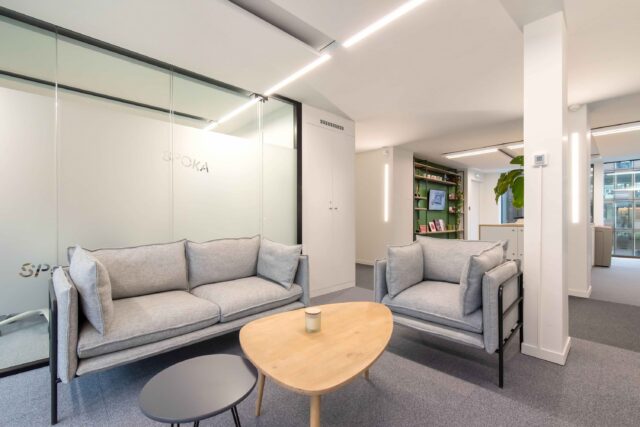
With the development of remote work, employees are required to manage meetings with both in-person and remote participants, so it is necessary to create a pleasant work environment by having spaces where they can isolate themselves. Acoustic or phone booths are elements to integrate into offices. This is especially true for startups that favor open spaces. Obviously, the idea is not to have a row of booths but rather to have as many social spaces as concentration spaces. This organization meets employee expectations and promotes a healthy work environment.
Finally, from an HR perspective, office layout must highlight the company’s DNA. Decorative elements and furniture reflect the company’s values and become an asset for the employer brand. Moreover, more than 1 in 3 employees consider workspace layout and decoration to be indicators of corporate culture. Professionals, such as LES BATISSEURS, can help you build your identity and highlight your values by finding the right furniture and decorative elements for your offices.
The goal of the layout is to give employees a reason to want to return to the office, as many of them are willing to return but to spaces better designed for their needs.
Well-being Through Plants
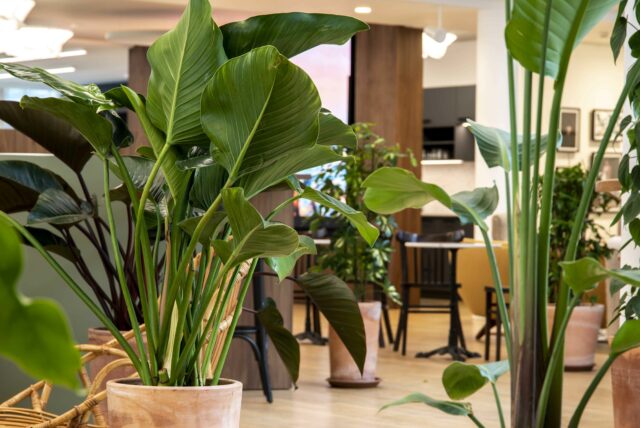
There are numerous scientific studies on the benefits of plants, and they all point in the same direction: plants have a real impact on employee well-being at work. One of them highlights the fact that employees who work with a green plant in their office have a productivity level 15% higher than others. The concept of biophilia in professional office design should therefore be taken into account.
Green plants may even lower absenteeism rates. A Norwegian study confirms this. Although it is older, dating back to 2002, it states that the presence of green plants in the workplace can reduce:
- Headaches by 45%,
- Feelings of fatigue by 30%,
- Coughing by 38%,
- Absenteeism reduced by 10%.
These are significant figures that have made many companies reflect on the link between well-being and performance. Observing the benefits of plants, human resources departments have sought to give meaning to greenery by offering gardening workshops to their employees. Don’t have an outdoor space? That’s not a problem; there are multiple solutions for bringing green into the office: living walls, aquaponics… You just need to find the option that perfectly fits your employees and your premises.
Eco-responsible offices
Speaking of pollution, environmental concerns are gaining momentum everywhere, and particularly among young people. According to a study conducted by Swytch in 2019, 70% of students and young workers would more readily accept a job with a company that has a positive environmental impact. But today, it is not enough to claim it; you must prove your ecological commitment in concrete ways. For example:
- Offering remote work helps reduce the carbon footprint associated with commuting. Thus, you preserve the environment by limiting employee travel and you combat presenteeism.
- Encouraging employees to commute by bike through mileage allowances.
- Implementing an eco-responsible charter to limit the impact of digitalization on the environment.
- (Re)Designing your offices with a responsible perspective.
- Eliminating the use of plastic cups and limiting printing.
Regarding this last point, some companies offer internal competitions to raise employee awareness of eco-friendly actions. In addition to acting for the environment, this strengthens team cohesion.
Flexible Scheduling
With a more mobile population, fixed hours no longer seem to be in tune with the times. Moreover, they no longer meet employee needs, as 35% of them experience difficulties balancing personal and professional life. To better manage this balance, some companies offer flexible hours. This allows employees to better manage their schedules and reduce commute times that are sometimes too long during rush hour. By offering this flexibility, your employees will be more inclined to invest themselves because you will be building a relationship of trust.
From an HR perspective, hybrid work allows for smaller premises because not all employees are present at the same time. This represents significant savings in both the short and long term.
There is no miracle solution to implement; you must build your corporate culture daily with all your teams and social partners. Listening to your employees is essential because their fulfillment has an impact on the company’s overall performance, so it is vital to tackle this issue head-on.
You Might Also Like These Articles
Learn More
Biophilia Contributes to Well-Being at Work
At a time when companies are more aware than ever of the physical, psychological, and social effects of the work environment, it is surprising to…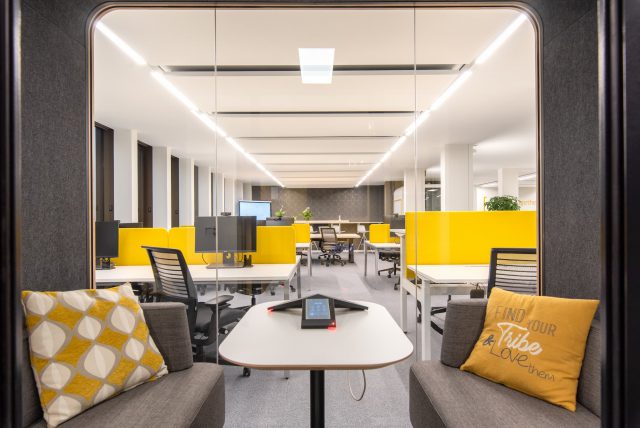
Learn More
Offices: An Essential Lever for Quality of Work Life
Quality of Work Life (QWL) now holds a central place in the modern professional world. Among the influential factors, workspaces play a crucial role. According…