10 Tips for Implementing Flex Office
The flex office layout offers great promise: more adapted workspaces, more agile teams, more fluid exchanges between employees, etc. This organizational model, which involves giving up assigned workstations in favor of shared workstations, is increasingly appealing to companies. According to a Deskeo survey from March 2021, 55% of surveyed companies state they are considering flex office. Nevertheless, among companies that have already adopted the concept, the results are mixed. Only 34% report a fully positive outcome.
The flex office is a delicate concept to implement. It requires the company to reinvent itself entirely. If you feel ready to take the plunge, here are our 10 tips for successfully carrying out your project and ensuring its success.
Don’t Overestimate Real Estate Savings
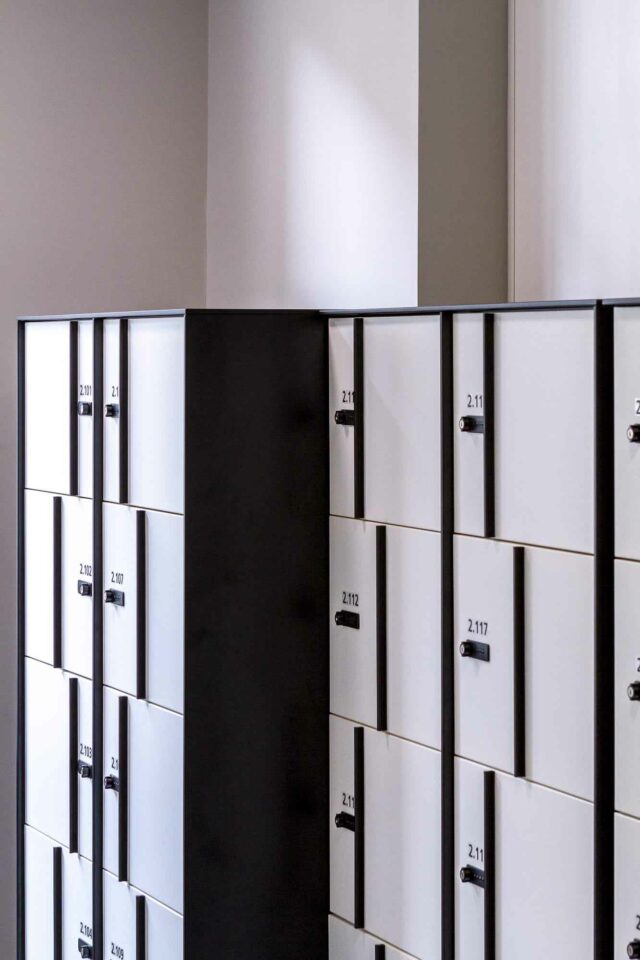
Flex office primarily allows for the rationalization of square footage. The goal is to transform the space gained from removed offices into additional areas useful for employees: meeting rooms, collaborative spaces, individual lockers, concentration zones, etc. The reduction in surface area is therefore rarely as significant as leaders imagine.
Don’t Underestimate the Occupancy Rate
Teleworking can help reduce the number of workstations. However, for this to work, it is essential to at least frame the balance between in-office and remote work by organizing a coherent rotation of teams.
On average, companies adopt a rate of 0.8 workstations per employee in a flex office setup. However, before deploying it, it is necessary to study employee habits and uses. In particular, it is imperative to consider the specificities of different professions. Some functions are very poorly suited to flex office. Thus, this organization will generally only concern a portion of the teams. It is also advisable to plan for a slightly higher number of workstations than identified needs. This allows for a margin of adjustment and anticipates peak attendance.
Multiply Spaces
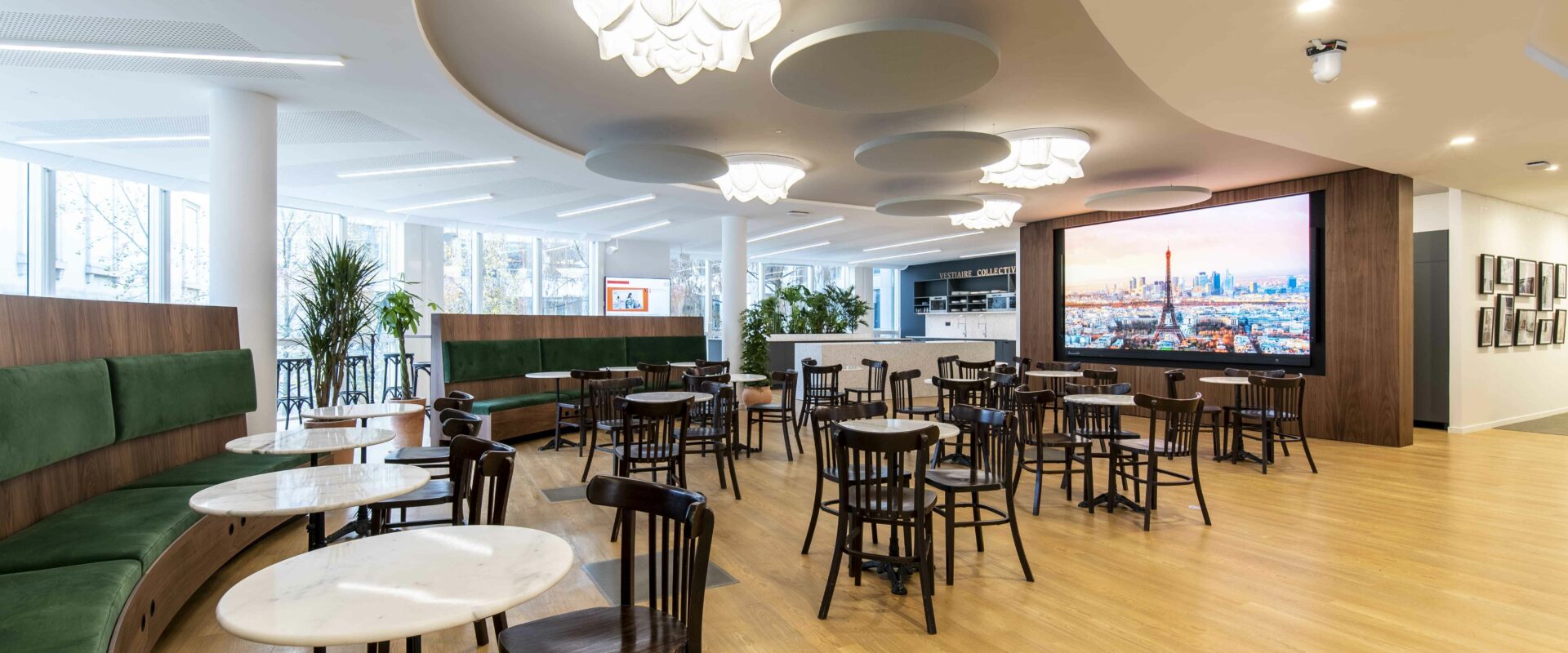
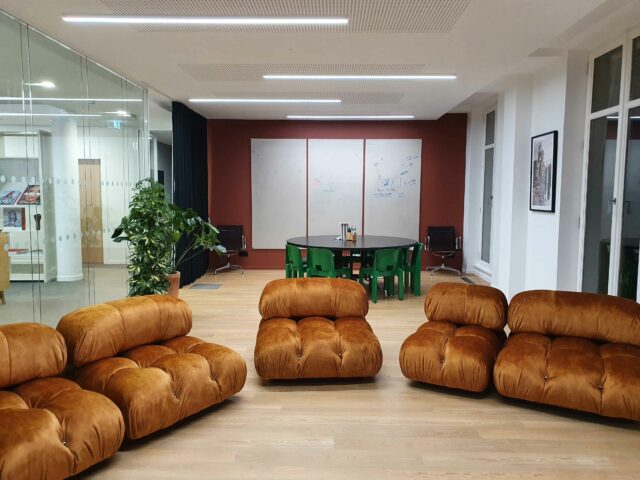
The main advantage of flex office is to offer employees a wide range of spaces, adapted to the multiple activities of a workday. Thus, deleted workstations are compensated by new spaces: collaborative spaces, living areas, phone booths, isolation pods, etc. These spaces offer new possibilities and constitute an opportunity to work differently thanks to flex office-adapted furniture. This arrangement is all the more relevant as, with the increase in remote work, the role of the office is evolving towards more collaboration and conviviality.
Identify Spaces
Flex office spaces must be clearly identified to maintain good office organization. Thus, a flex office layout recommends the creation of “neighborhoods,” each dedicated to a team or group of teams that interact regularly.
Adopt Trust-Based Management
The transition to flex office implies management based on trust. Trust-based management values initiative-taking and meets the agility needs of today’s businesses. The company thus prioritizes the strength of the collective, composed of responsible actors capable of leading, organizing, and coordinating. Therefore, employee control is to be avoided. Managers, however, remain indispensable within the collective. Their role and positioning then shift towards that of a pilot who shows the way and a coach who encourages their teams and maintains the connection between employees.
The fact that the initiative is led by management is the surest way to succeed in its organizational transformation to flex office. Because beyond a real estate project or professional office fit-out, flex office is an ambitious project that reinvents all managerial practices.
Defuse Resistance
The transition to flex office is difficult for employees. The initial psychological barrier is very significant, and resistance to change is strong. Because flex office means losing one’s personal space, and this can be perceived as being marginalized by the company. It is therefore essential to convince employees of the benefits this system will bring to their quality of work life. For this, it is essential that the company renews itself entirely. Otherwise, the loss of individual workstations can be interpreted by employees as an economy solution made at their expense, rather than an opportunity to improve work organization. Furthermore, the implementation of a solid change management strategy is necessary to defuse resistance. Employee buy-in is a process that can take time. Nevertheless, persistent resistance from some individuals should not jeopardize the entire project. The positive dynamic carried by other employees will eventually convince them.
Focus on Benevolence
Flex office implies rigorous organization. Nevertheless, implementing overly strict rules can be counterproductive.
Prohibiting sitting in the same spot twice or gathering with the same colleagues can alienate people. The goal of flex office is, of course, to foster exchanges and team mixing. But this goal is not achieved through constraint. Relationships cannot be forced; they are formed and built naturally, over time. The best strategy is therefore to encourage, without imposing.
Humanize the Workspace
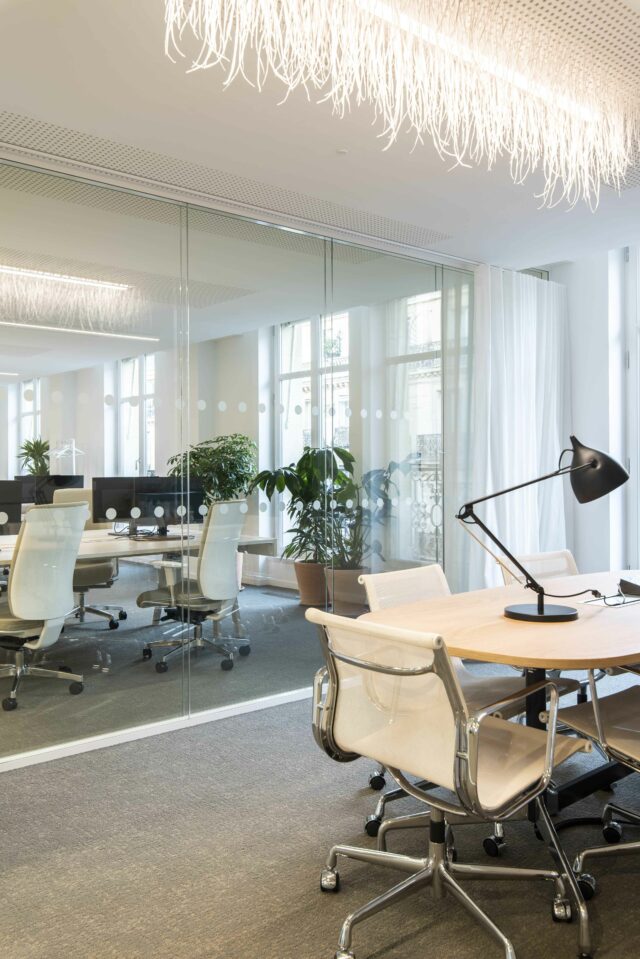
One of the most frequently raised risks with flex office is the dehumanization of offices. The depersonalization of the workstation should not necessarily imply a depersonalization of the offices. It is possible to offer teams the opportunity to personalize their neighborhoods and for employees to invest in common areas.
Consider a Test Phase
Studies have shown that employees who do not practice flex office have an unfavorable opinion of the concept. Conversely, those who do practice it are mostly won over. For this reason, it is advisable to launch a test project with a team inclined towards this model. This “test and learn” phase, with feedback, would allow for identifying problems and better apprehending a larger-scale deployment. This co-construction process, which directly involves employees, contributes to good change management practice.
Digital Transformation
For employees to be operational, regardless of their location, it is necessary to properly equip them and provide a high-performing and innovative digital infrastructure.
The implementation of a digital workplace within the company is a prerequisite for the proper functioning of flex office. This unique, intuitive, and user-friendly interface integrates all communication solutions (mobile telephony, video conferencing, etc.), collaboration (instant messaging, document sharing and management, etc.), and office automation (professional software, emails, calendar, etc.) necessary for employee productivity.
Tools specifically dedicated to flex office can enrich the digital workplace. Numerous software and applications help streamline organization, monitor office occupancy rates, and improve user experience.
Implementing flex office in a company is a real challenge. While many companies have successfully completed this transformation, others, on the contrary, are reverting. Before embarking, it is therefore crucial for the company to question its motivations and its capacity to undertake a number of profound transformations in its organization. If all signs are green, then good preparation, rigorous organization, and support from industry professionals will lead this transformation on the path to success.
We are at your disposal to discuss your project now: contact@lesbatisseurs.paris
You Might Also Like These Articles
Learn More
Office Relocation: How to Foster Employee Buy-in?
Relocating offices involves a profound disruption of employee habits. Like any change, it can be poorly perceived and experienced as a threat. Destabilized and pulled…
Learn More
Is Flex Office the Miracle Solution for Your Company?
The COVID-19 health crisis has accelerated changes in the world of work. Remote work has become integrated into our organizational models. Many companies are questioning…