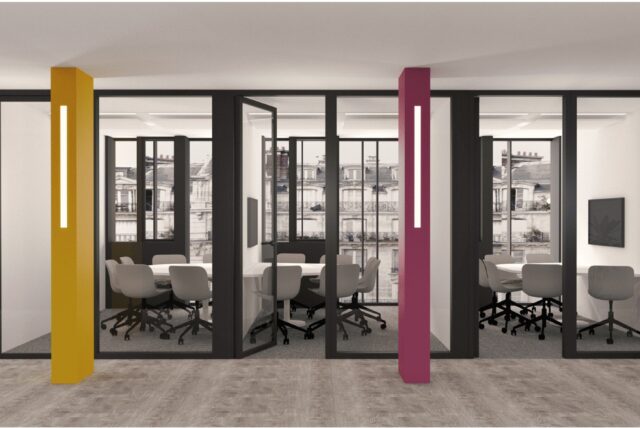
Is Flex Office the Miracle Solution for Your Company?
The COVID-19 health crisis has accelerated changes in the world of work. Remote work has become integrated into our organizational models. Many companies are questioning these unused square meters and the opportunity to adopt flex office to save on their real estate expenses. Especially since this system also allows for the implementation of a “clean desk policy” in line with the health regulations imposed by the pandemic. According to a Deskeo survey published in March 2021, 55% of companies surveyed stated they wanted to implement flex office soon. Is flex office a miracle solution? What are the advantages and disadvantages of this concept? We’re here to help you gain clarity.
What is Flex Office?
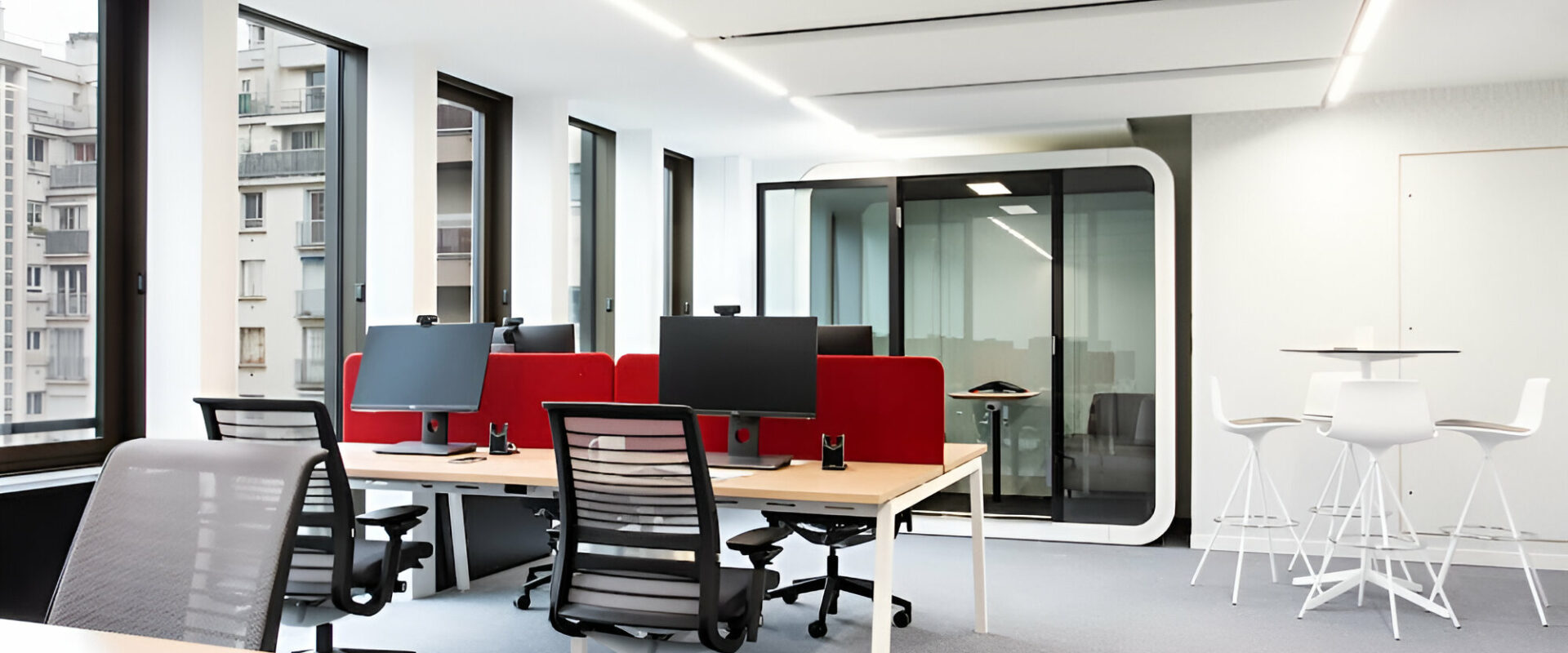
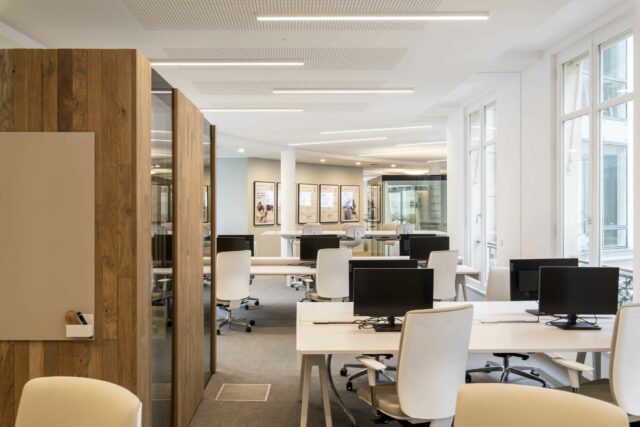
Flex office, or flexible office, is an office layout that involves not assigning dedicated workstations to employees in their workplace, but rather offering “self-service” workstations. The goal of this organizational model is to provide employees with more flexible workspaces that are better suited to the multiple tasks of a workday, thereby fostering productivity and creativity. Employees can easily move from a concentration space for writing to a brainstorming room for team collaboration.
Flex office implies that employees no longer have a fixed desk to work at, but rather a multitude of shared spaces. The space is then organized according to usage. Employees will therefore choose to settle in the area that best suits the task they need to accomplish.
Flex Office: How Does It Work?
Flex office can be applied to all employees or, more reasonably, only to teams whose professions and work organization lend themselves to mobility.
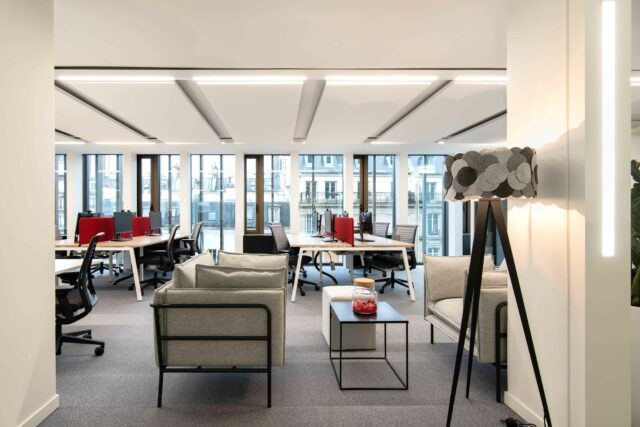
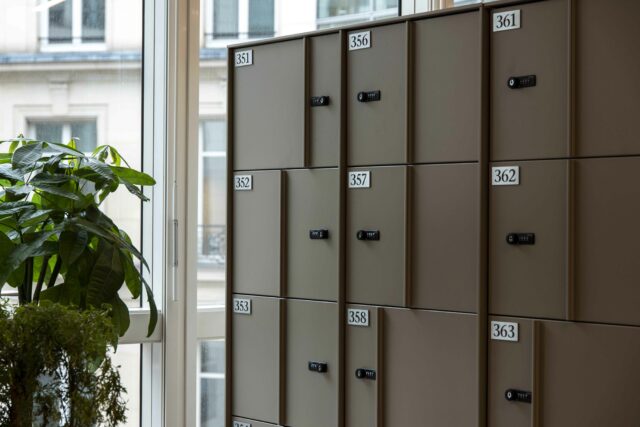
Each employee working in a flex office setup has a secure personal space where they store their computer, files, and personal belongings. Each morning, they are free to choose the workspace that best suits their mood, their task for the day, or their potential need to collaborate: a concentration space, an open-plan office, a phone booth, a meeting room, a brainstorming area, etc. When employees leave their space, they are required to clear and clean it.
Flex Office: A Complex Model, Between Opportunities and Threats
Advantages of Flex Office
Optimizing Office Space and Reducing Costs
Between remote work, external assignments, vacations, and sick leave, traditional office layouts often result in a lot of unused space. For a company, every square meter represents a cost. Flex office would thus optimize the utilization rate of each square meter and potentially reduce the overall office footprint. More than just saving space, the main advantage of flex office is a better return on investment for the workspace. The eliminated workstations are then transformed into work areas, living spaces, and services useful to employees present in the workplace.
A Better Work-Life Balance
Employees seek greater comfort at work and a better work-life balance. By spending less time commuting, remote work promotes this balance. In September 2020, 86% of employees stated that they ideally wanted to work remotely at least one day a week (Paris Workplace 2020 SFL-IFOP Barometer). Synonymous with freedom and flexibility, the flex office concept inherently implies the adoption of remote work within the company.
Increased Productivity and Creativity
The goal of Flex Office is to increase creativity and productivity. By breaking away from the routine of conventional work, flex office opens up new perspectives and ideas. By allowing employees to choose the most suitable location for their task, it promotes efficiency and quality of work.
More Exchanges and Interactions
Employee mobility within the company fosters contacts and interactions among all employees. Horizontal and vertical exchanges are facilitated. These encounters build connections and can help develop a strong corporate culture. Furthermore, flex office encourages the creation of collaborative spaces to gain agility and promote project-based work.
Trust-Based Management
Effectively managing a dispersed group requires a managerial revolution and imposes a management style based on trust. Out with control measures! Trust-based management values autonomy, initiative, and meets the agility needs of today’s businesses.
Cleaner and More Eco-Responsible Premises
No more piles of files accumulating, no more objects lying around… Users must absolutely clear and clean their workstation after use. This is known as the “Clean Desk Policy.” An argument that resonates particularly during a pandemic. It is also a good opportunity for the company to implement a more virtuous ecological policy. By encouraging its employees to dematerialize more, it thus reduces waste.
Greater Mobility
Flex office encourages users to utilize the entire space and thus move around according to their activities. This mobility is beneficial for employees’ health. They are thus encouraged to move regularly and be more active.
Risks Associated with Flex Office
The Need for Rigorous Organization
Nomadic work implies the adoption of rigorous organization for both employees and management.
Underestimating the occupancy rate of premises or poor management of remote work organization can quickly lead to problematic situations: an employee wandering through offices looking for an available spot, a colleague searching for their coworker on different floors before realizing they are working remotely that day… The examples are numerous. These kinds of situations quickly generate stress and can undermine employee morale and motivation.
Organization is therefore essential. For planning remote work, for scheduling meetings with teams, for reserving suitable spaces… Despite its apparent flexibility and freedom of action, flex office organization actually requires a great deal of rigor.
The proliferation of collaborative spaces helps to mitigate this kind of problem and streamline organization. This is why good flex office organization does not lead to a significant reduction in office space. In fact, flex office focuses more on reallocating the uses of the workspace.
Furthermore, clear identification of the different spaces in the office layout will help employees navigate more easily.
Attachment to the Individual Office
In any change, human barriers are the most difficult to overcome. Having to give up one’s own little corner often seems like an insurmountable obstacle. Beyond the reassuring presence of personal items, the loss of personal space is often perceived by employees as a dispossession, a feeling of being excluded and, like their desk, interchangeable. This feeling of exclusion can affect the sense of belonging to the team and, in the long term, lead to employee disengagement.
Moreover, for managers, the individual office is often synonymous with a career status achievement, and few are willing to give up this advantage. Nevertheless, it could prove delicate to impose an organization on employees that managers themselves are unwilling to adhere to.
A Feeling of Isolation or Detachment from the Company
Beyond shared offices, flex office implies the concept of employee nomadism. Flex office implies the concept of employee nomadism. Connected and autonomous, employees can work anywhere in the company, as well as from home or a third place, depending on their needs and constraints. This physical distance from the company can gradually transform into psychological detachment. The challenge for companies is to develop communication tools that allow employees to interact, track project progress, and participate in daily company life, even remotely.
In the office, developing a strong connection with the company and teams therefore becomes paramount. However, shared office organization is generally framed by strict rules. Employees are encouraged to change desks and desk neighbors every day. Under the pretext of wanting to encourage interaction, employees who often work together or who get along are prevented from grouping together. Such overly strict rules risk, on the contrary, damaging social ties, creating frustration, and fostering a feeling of isolation.
While flex office responds to the evolution of our working methods towards greater nomadism and flexibility, it is undeniable that its implementation cannot be improvised and that its drawbacks must be considered before embarking on it. The company must be ready to reinvent itself entirely.
Flex Office: Getting Support for a Successful Transition
While Flex Office represents a relevant response to changes in work and real estate challenges, its implementation cannot tolerate improvisation. To ensure that space optimization does not turn into a source of stress and disorganization (employees without dedicated desks, difficulty locating colleagues), methodical preparation and specialized support are crucial.
For the transition to be a success and generate the expected benefits (productivity, well-being, and savings), the company must follow a rigorous roadmap:
- The Essential Usage Audit: It is crucial not to rely solely on physical occupancy rates. A precise diagnosis of actual activities and team needs (concentration time, collaborative work, confidentiality) allows for correct sizing of premises and establishing the right ratio of workstations.
- Change Management: Beyond layout, adopting Flex Office is a cultural revolution. The company must actively involve its employees in developing the Flex Office Charter (rules for the Clean Desk Policy, space reservation process, etc.). Human support is key to overcoming psychological barriers (loss of personal desk) and ensuring buy-in.
- Digitalization of Organization: To streamline nomadism, implementing digital tools (desk and room reservation systems, efficient internal communication) is essential. These tools guarantee the organizational rigor required by this model.
- Optimized and Diversified Layout: Successful Flex Office is not just about eliminating desks, but about intelligently reallocating space. The goal is to offer a range of work environments adapted to each task: acoustic concentration pods, dynamic co-creation spaces, informal lounges… thanks to a selection of furniture adapted to flex office.
It is on these pillars that the expertise of the agency Les Batisseurs, specializing in flex office design, truly comes into its own. We support you from the strategic phase (needs analysis and concept development) to the concrete realization of your new workspaces. Our mission is to transform your project into a lever for performance, by designing flexible offices that support your company culture and maximize employee well-being. By partnering with our expertise, you ensure a smooth migration and a configuration of your premises that truly serves your organization’s agility.
Redesigning all premises, evolving managerial practices, digitalizing organization, implementing an internal communication system, and actively supporting employees through this change. Thus, with good preparation and professional support, the company will successfully transition to flex office.
We are at your disposal to discuss your project now: contact@lesbatisseurs.paris
You Might Also Like These Articles
Learn More
10 Tips for Implementing Flex Office
The flex office layout offers great promise: more adapted workspaces, more agile teams, more fluid exchanges between employees, etc. This organizational model, which involves giving…
Learn More
Coworking, Shared Workspace
In recent years, coworking has taken major urban centers by storm. Coworking has become the new trend in the French working world. But is this…