Coworking, Shared Workspace
In recent years, coworking has taken major urban centers by storm. Coworking has become the new trend in the French working world. But is this work environment only for freelancers? What are the layout rules for these coworking spaces? Why has coworking become a globalized trend? Let’s explain.
What is Coworking?
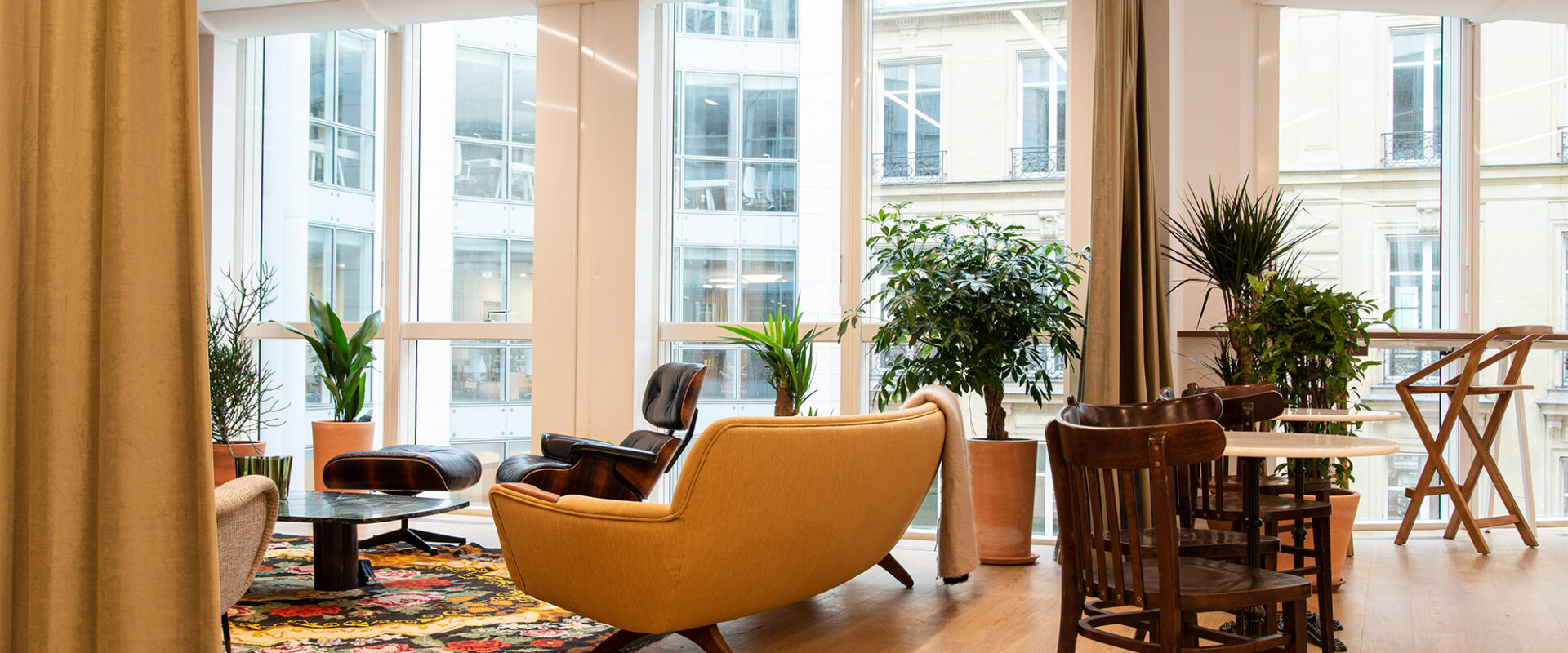
Coworking (“shared office”) is a place that offers office rentals by the month, day, or even hour. Coworkers share common areas and have open or private offices to work in. It also stands out for its rich and diverse range of services (cafeteria, gym, dry cleaning, etc.).
Coworkers are not just freelancers. Indeed, many companies have wanted to move away from their traditional contracts in conventional buildings. They have thus turned to more flexible, less restrictive coworking spaces with attractive services.
The History of Coworking
The first shared space, named C-base, opened in Berlin in the 90s. A precursor, this first “hackerspace” aimed to bring together technology enthusiasts to share their knowledge in a freer setting. Nevertheless, it wasn’t until 1999 that the term “coworking” was first used by Bernie de Koven, an American writer.
Coworking then expanded to the United States, specifically Silicon Valley. In 2005, Brad Neuberg created the first official coworking space to offer a more sociable business center. And in 2006, Brad partnered with Chris Messina (the creator of the Twitter hashtag) to create the Hat Factory, the first full-time open space.
In France, it wasn’t until 2008 that the first coworking space, called “La Cantine,” appeared. In the following August, an agreement between several platforms allowed its members to freely access any participating space.
The same year, Berlin opened Café St. Oberholz, based on a new model: free and unlimited internet access with the possibility of working in the café.
Since then, coworking has become globalized, and many shared spaces have emerged in major cities like Paris, Lyon, and Nantes.

Types of Coworking
To meet the diverse needs of workers, coworking has developed into various forms.
Business Centers
A business center is a private workspace that provides all the necessary equipment for a company: individual and equipped offices, internet connection, printers, projectors, conference rooms, etc.
Coworking Cafés
As its name suggests, it’s a café that offers workstation rentals by the day, half-day, or even by the hour. There’s no need to pay for multiple drinks to stay; you pay for the time spent.
Corpoworking
Here, a company provides spaces to host external individuals to stimulate innovation and intrapreneurship. For example, BNP Paribas created WAI (We Are Innovation), a place dedicated to innovation where startups and corporates meet. As for Orange, they created Villa Bonne Nouvelle in Paris.
Sector-Specific Coworking Spaces
As the name suggests, sector-specific coworking spaces are reserved for individuals whose activity sector is dedicated to the coworking space. For example, Marketing Space in Paris is a coworking space dedicated to marketing and communication professions.
Hybrid Coworking
These shared offices combine coworking with another activity or service. We’ve seen some that combine coworking and babysitting (CoWorkCreche), cooking (Volumes), or education (Liberté Living Lab).
All Atypical Coworking Spaces
More unusual, remote workers can set up their computers in a church or a monastery. These places have been rehabilitated to offer collaborative workspaces. Other atypical spaces exist, such as forests, coboats, or even at a cohomer’s place.
What are the Different Spaces in a Coworking Environment?
A coworking space, like those offered by WeWork, provides various independent areas to meet the needs of all coworkers:
-
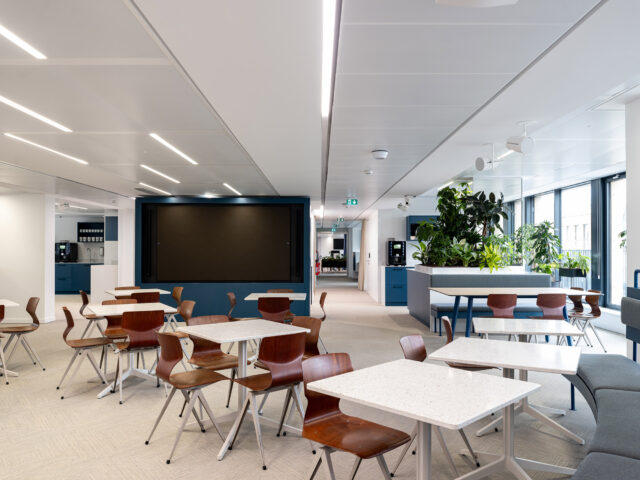
The Open Workspace (or “open space”): This is the heart of coworking. It’s a large shared area with many individual desks or large tables where coworkers can freely settle in. It’s an ideal place for networking and spontaneous interaction.
-
Private Offices: These are enclosed offices, of various sizes (for one to several people), offering more privacy and concentration for teams or individuals who need it. They are often rented on a monthly basis.
-
Meeting Rooms: Essential for client appointments, brainstorming sessions, or presentations. They are generally equipped with videoconferencing equipment, screens, and whiteboards, and can be booked by the hour or day.
-
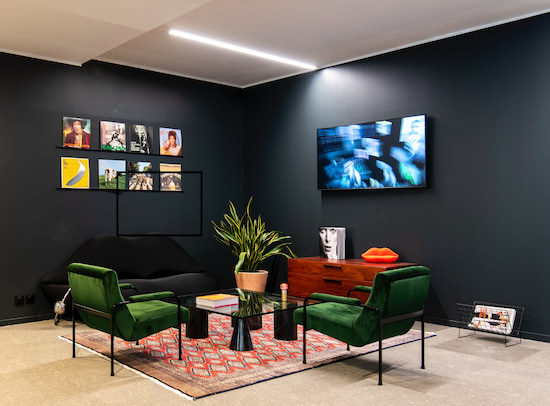
Relaxation and Social Areas: These zones are designed for breaks, informal discussions, and building connections among coworkers. They often feature sofas, comfortable armchairs, a shared kitchen with equipment like a microwave and refrigerator, and sometimes even games (foosball, ping-pong…).
-
The Kitchen or Dining Area: A place where coworkers can prepare and eat their meals, have coffee or tea, and socialize informally. Some coworking spaces offer snacks or drinks for purchase, similar to a café.
-
Phone Booths: Small, soundproofed spaces for making important calls or participating in video conferences without disturbing other coworkers.
-
Event Space: Some coworking spaces have larger areas dedicated to organizing events, conferences, workshops, or training sessions.
-
Sometimes, other more specific spaces may exist: such as recording studios, creative workshops, silent libraries, or wellness areas (yoga room, nap space…).
These relaxation and social areas obviously vary depending on the company’s commitments and values.
Our team is available to advise you and design coworking spaces adapted to the well-being of your employees.
Advantages of Coworking
If this working model is increasingly favored, it’s because it offers numerous advantages.
Breaking Isolation
Freelancers and digital nomads can break away from working at home and enjoy a comfortable workspace. These open spaces allow them to rediscover corporate exchanges and a collaborative spirit. Working alongside others can be stimulating and motivating.
Boosting Productivity
Shared offices allow professionals from the same industry to meet. These encounters foster discussions about your work and mutual enrichment. Also, beyond providing a collaborative work environment, coworking offers tailor-made services, similar to those of a hotel.
New Technologies
In a shared workspace, an impeccable internet connection is essential. But fiber optic isn’t the only technology powering a coworking space. In most of these spaces, access is secured by personalized badges to allow 24/7 office access.
Additionally, an application is available to book a meeting room or a private office. New technologies will be at the heart of future coworking developments to continuously improve the user experience.
Reducing Costs
A traditional office rental is expensive, and this working model helps save money. Unlike a classic lease, coworking has the advantage of offering a flexible lease. You choose the rental duration based on your resources and needs; you are no longer committed for several years.
Developing Your Network
This working model allows you to meet new people from all walks of life and expand your network. Also, events created within the coworking space help establish new connections. For example, the coworking space “Le 144,” located in Nantes, offers breakfasts and conferences to regularly bring coworkers together. Members of the coworking space have exclusive and free access.
Disadvantages of Coworking
Although this working model offers many advantages, it also has disadvantages.
Noise Pollution
Between phone calls and exchanges between colleagues, these spaces are lively and can be very noisy. Unfortunately, these interactions can distract and disrupt other coworkers. It’s far from ideal for working quietly.
By having your own offices, you manage your employees’ noise and can enjoy peace and quiet at work.
Lack of Confidentiality
This new way of working is not suitable for all positions. Indeed, within a company, certain departments like HR or finance need a fixed office because they handle confidential information.
Cost of Offices
Depending on the location of the coworking space, prices can rise very quickly, especially with options (meeting rooms, etc.). Similarly, depending on the number of employees and the working model, coworking spaces are not always the ideal solution. In these cases, it is preferable to choose your own professional offices.
Not Suitable for All Professions
To do coworking, one must necessarily have a dematerialized activity. Consequently, this working method is not possible for all entrepreneurs.
What’s the Future of Coworking in France?
Coworking spaces continue to proliferate in major French cities like Paris, Marseille, and Lille, even if the model is regularly questioned. Was coworking just a passing trend, or, on the contrary, the beginning of a new way of working?
Coworking offers businesses a certain flexibility. Indeed, the traditional 3-6-9 lease no longer aligns with companies’ expectations, and monthly office rental better suits the current context. However, this business model had a significant impact on coworking spaces during lockdown periods. Many companies canceled their subscriptions overnight to avoid paying for empty premises.
Flexibility is coworking’s main asset. By favoring on-demand solutions, coworking spaces accelerate the decline of the traditional lease, a heavy commitment for a company.
Also, this new work environment distinguishes itself from the traditional office thanks to its multitude of services included in the subscription: cleaning, property tax, gym… Employees only need to set up their belongings in a fully equipped space. A quick and efficient move-in!
Moreover, coworkers are not just freelancers. Half of WeWork’s clients are companies with over 500 employees who rent entire floors.
The coworking offer is very uneven in France. While there are a great many spaces in large cities like Paris, the network needs to be developed in provincial cities like Meaux, which has no solution for remote work other than at home.
The coworking industry continues to professionalize. Large companies understand that coworking can be integrated into their real estate strategy as well as their managerial strategy. Some, like Spotify, for example, offer a monthly coworking budget to their employees.
According to a study by the International Workplace Group (IWG), the sector’s activity in France is expected to generate an 88% increase in turnover by 2030, totaling nearly 123 billion euros.
Corpoworking: Coworking Reimagined by Companies
The word “corpoworking” comes from the fusion of corporate and coworking. In other words, it refers to a collaborative workspace within the same company. Specifically, the company provides shared offices within its premises. This might sound like flex office, you might say! However, there is a nuance between the two. Indeed, corpoworking, unlike flex office, opens its workspaces to external employees such as clients, service providers, or even a developing startup.
The company can also set up cross-functional project teams to work together in enclosed offices rather than remotely. This is the case, for example, with the European automotive maintenance giant, Mobivia, with its Move Factory, an open and hybrid third-place integrated into its headquarters in Paris.
How to Design a Coworking Space?
Designing shared spaces must take into account technical and physical characteristics (light, noise, internet…). And this must be accompanied by a global reflection on usage to determine the planning of workspaces, relaxation areas, and meeting rooms.
Every detail of the design must be carefully considered to attract and retain users. Indeed, offering them a real choice of workstations is essential, without, of course, becoming a jumble of different types of workstations. This is why architects will not place a noisy area near a work zone. The professional will seek to locate coffee points in central areas to attract as many people as possible and facilitate encounters. Also, grouping meeting rooms will prevent users from constantly crossing work areas and distracting other coworkers.
Designing coworking offices requires technical knowledge on the subject (thermal comfort, acoustics, natural lighting…). Therefore, one must have training in the field before embarking on such a project. Thus, if you are new to office layout, call on professionals who have the required skills to carry out this work.
Do you have a project? Feel free to contact us by email or phone.
You Might Also Like These Articles
Learn More
Which professional premises should you choose for your company?
Choosing the right premises for your offices is essential. They have a decisive impact on the project’s outcome. Will the premises allow for an optimal…
Learn More
Design Your Offices as a Collaborative Workspace
Companies have realized the value of collective intelligence. The concept of collaborative work has become a true leitmotif, especially since the rise of remote work…