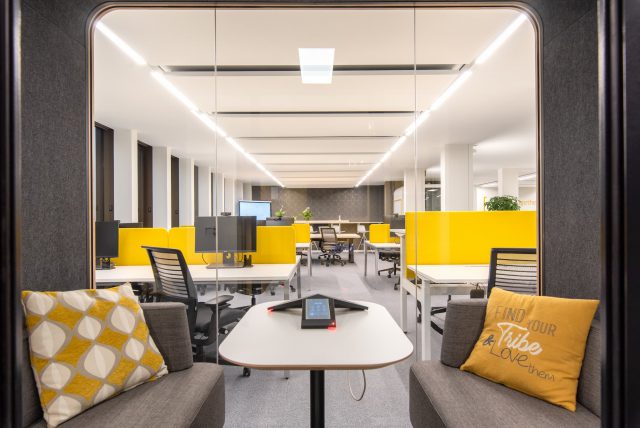
Offices Designed to Improve Employee Health
Healthy body, healthy mind! This phrase resonates in the professional world, where health is now closely linked to the concept of productivity. What if the workspace became a lever for well-being?
How can offices contribute to improving employee health? What are the best practices to implement? What are the benefits of this health-focused support for both the company and its employees?
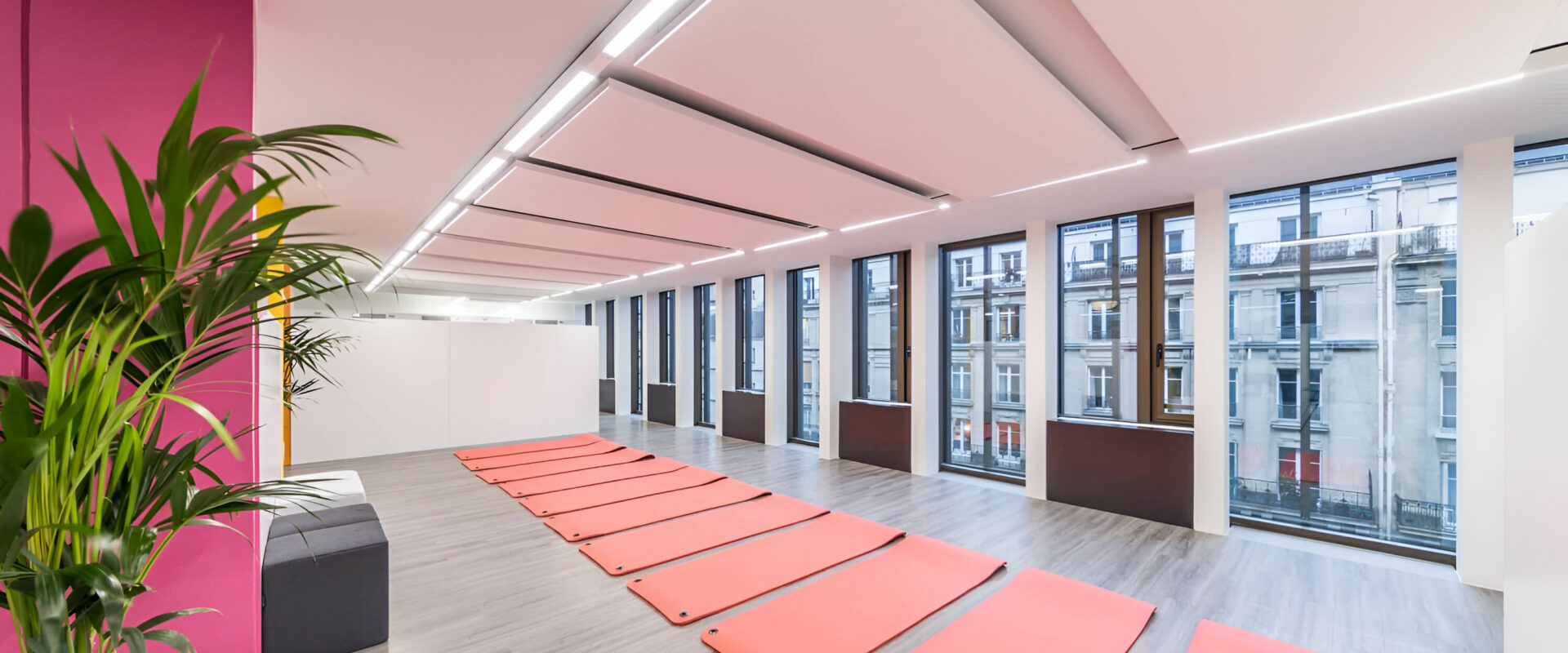
Combating Sedentary Behavior at Work
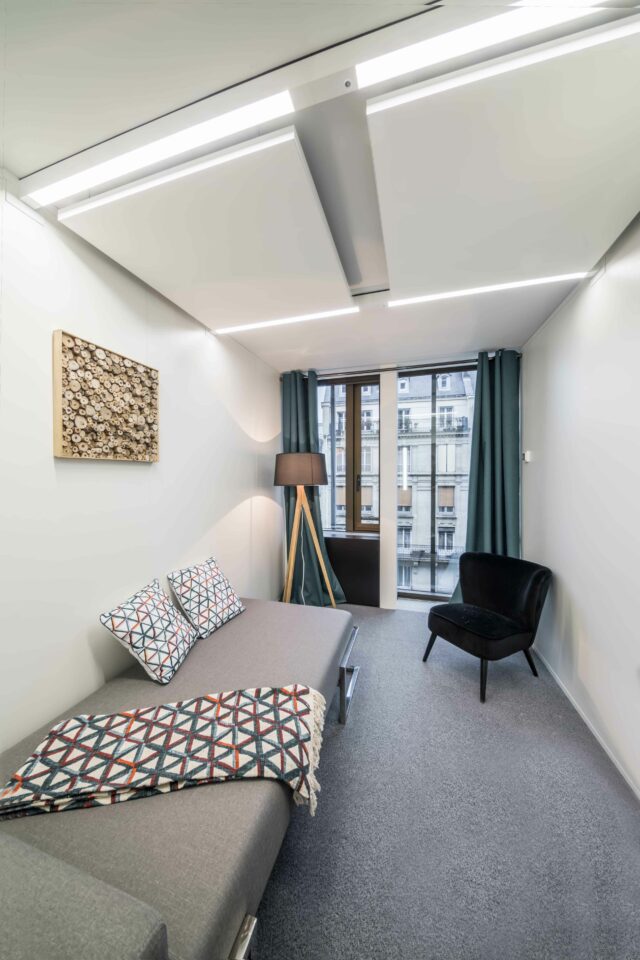
Encouraging Mobility
Doctors are unanimous: the sedentary nature of office work is harmful to our health. A study conducted by researchers at Columbia University in the United States and published in the journal Medicine & Science in Sports & Exercise recommends standing up and walking for 1 minute every hour.
Encouraging employees to stand up regularly is a beneficial health practice. Workspace design therefore naturally improves employee health. For example, setting up one printer per floor not only encourages printing less but also prompts movement.
The same applies to the flex office, which recognizes that each task requires a specific environment. It is beneficial to encourage employees to choose their workspace based on the nature of their missions. Whether it is a silent concentration zone, a dynamic collaborative space, or a desk adapted for standing work, these changes always lead to movement.
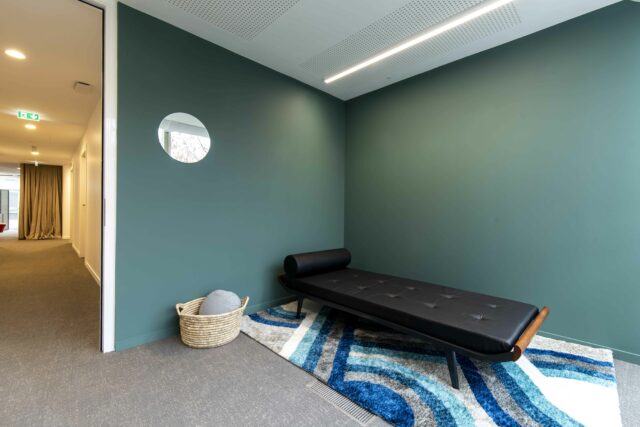
Integrating Health into Daily Professional Life
To go beyond physical layouts, many companies now provide their employees with health-oriented services. This can include access to therapists or coaches. Indeed, more and more companies are offering their employees sports classes, meditation, therapeutic support, and health workshops. Initiatives related to food and nutrition are particularly on the rise.
This holistic approach highlights the link between physical health and overall well-being at work.
Furniture Is Closely Linked to Health
Furniture Adapted to Every Need
Work-related back pain has increased by 2,300 cases per year for the past 10 years (source: health insurance). Adapted and comfortable chairs are essential for preventing pain. The introduction of ergonomic chairs with customizable lumbar support, suitable for all body types, can improve employee comfort and health. This type of equipment helps prevent backaches and stimulates blood circulation, thereby improving the physical health of employees.
Ergonomic furniture thus becomes a wise investment for the company and a guarantee of satisfaction for employees.
To learn more, discover our article How Does Furniture Improve Your Employees’ Productivity?
Environmental Ergonomics
Noise Management
Noise can be a major source of stress at work. Silent work zones, soundproof partitions, and the use of absorbent materials are concrete solutions to mitigate noise and promote concentration. A calm atmosphere contributes to a work environment conducive to mental health.
Well-Thought-Out Lighting
Lighting also impacts employee health. The integration of natural light and adjustable lighting systems can help regulate the circadian cycle, reduce eye strain, and significantly improve morale.
Integrating Nature into Your Offices
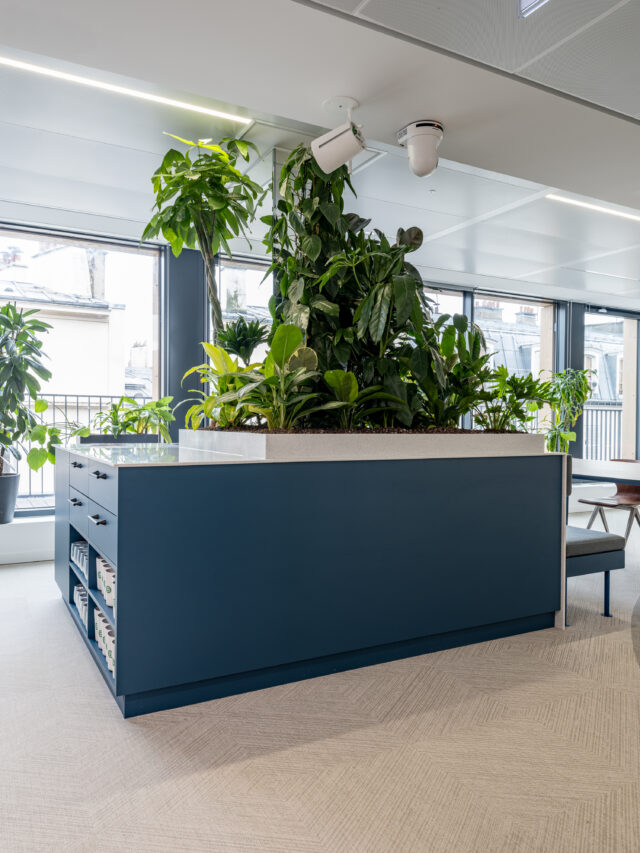
Working in an environment inspired by nature is much more than a decor trend. It is a genuine approach called biophilia, which aims to reconnect employees with natural elements to promote their physical and mental well-veing.
Studies have shown that the simple presence of plants in workspaces can reduce stress, improve concentration, and increase job satisfaction. But biophilia is not limited to flower pots: it also encompasses the use of natural materials (wood, stone), natural light, views of the outdoors, and even sounds or scents that recall nature.
Designing an office with indoor green spaces, plant walls, or a wooded terrace allows employees to recharge, better manage pressure, and regain energy. Some spaces even integrate plant-filled bubbles of calm, ideal for breaks or times of intense concentration.
In addition to its positive effects on mental health, biophilia contributes to better air quality and a soothing work atmosphere, conducive to cooperation and creativity.
Nature soothes, stimulates, and protects. Integrating it into offices means offering employees a more vibrant and balanced environment, serving their performance… and their serenity.
Rethinking workspaces to improve employee health is not a trend but an imperative. Layouts promoting mobility, custom ergonomic solutions, and special attention to environmental ergonomics can transform offices into havens of well-being. By investing in health at work, companies will benefit from increased productivity and job satisfaction.
What if you took the first step? Ergonomic audits, adapted furniture, or well-thought-out spaces: there are many ways to invest concretely in your employees’ health.
You Might Also Like These Articles
Learn More
How to improve employee well-being at work?
The health crisis has reshuffled the deck for corporate work. Remote work, flexibility, office layout, individual space, eco-responsibility… the corporate world has had to adapt…
Learn More
Biophilia Contributes to Well-Being at Work
At a time when companies are more aware than ever of the physical, psychological, and social effects of the work environment, it is surprising to…